Typical timescales
For the electrical work alone, a small flat might take three to five working days. A typical three-bedroom house often takes somewhere around one to two weeks. Larger or more complicated homes can take longer.
Then there's making good – plastering and finishing walls and ceilings – which is usually a separate job afterwards.
The two stages
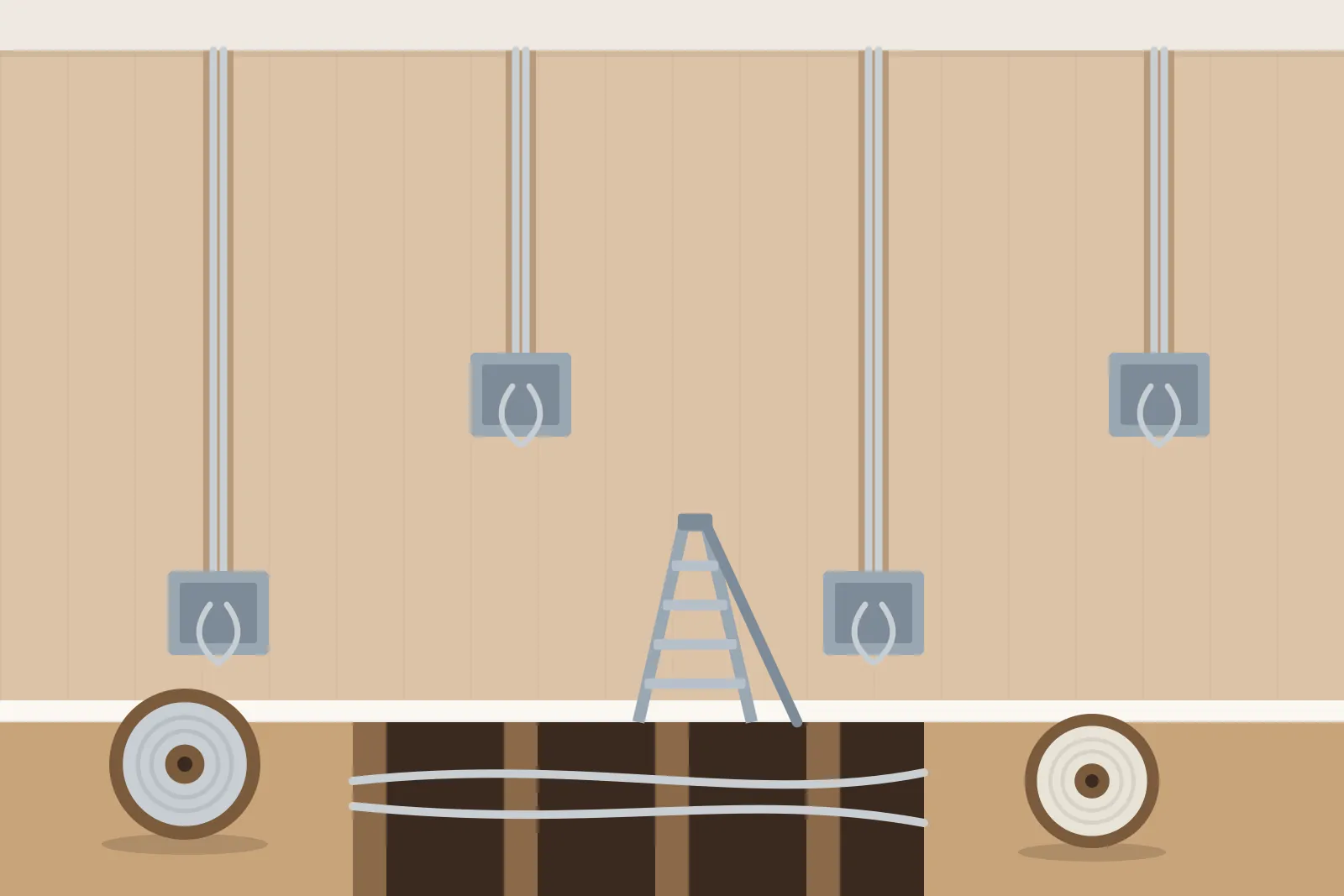
First fix is the messy bit: lifting floorboards, cutting channels, running new cables and fitting back boxes. That's where most of the time goes. After the walls are plastered, the electrician comes back for second fix – fitting sockets, switches, lights and the consumer unit, then testing and certifying everything.
The gap between the two depends on your plasterer, so it's worth lining them up early.
Need an electrician?
Describe the job and compare free quotes from local electricians near you.
- Free to use
- No obligation
- Compare local electricians
- Quick online form
You'll continue to our quotes partner, MyJobQuote, to describe your electrical job.
What slows things down
- Living in the house while the work goes on
- Solid floors, stone walls or concrete ceilings
- Lots of extra points, lighting circuits or smart controls
- Changes of mind halfway through
- Faults or surprises found under floors – it happens
- Waiting for other trades
Planning tips
Agree a schedule with your electrician before they start, including which rooms will be done when and when you'll be without power. Ask whether they'll restore temporary power each evening – most do for occupied homes.