EV Charger Installation: Compare Quotes from Local Electricians
Charging at home is the cheapest and most convenient way to run an electric car. Tell us about your property and parking, and compare quotes from electricians who install home chargers near you.
- Home EV charger installation
- Supply and board checks
- Tethered or untethered chargers
- Garage and driveway chargers
- Charger replacements
- Smart charging set-up
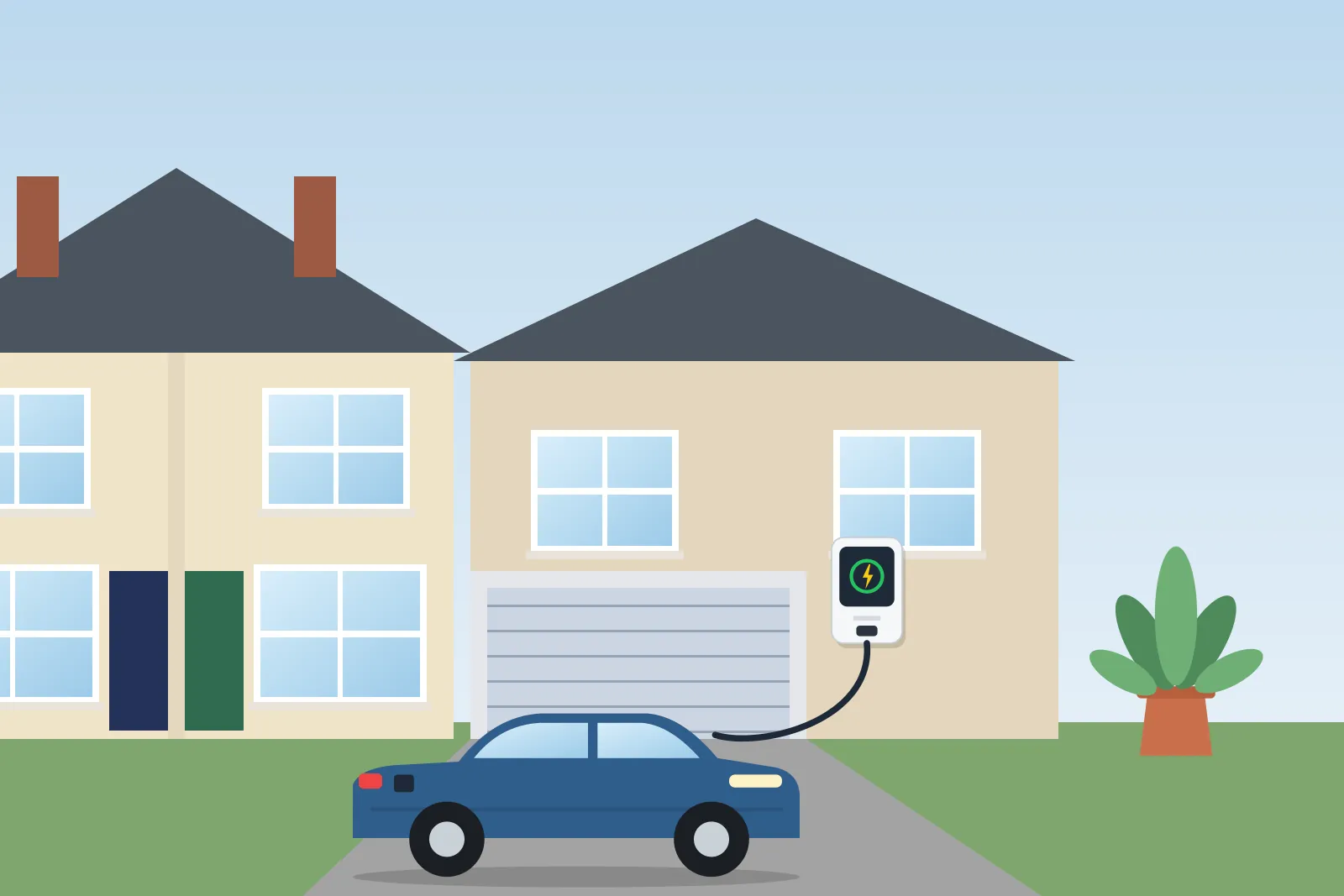
A home charger – sometimes called a wallbox or chargepoint – is a dedicated charging unit fixed to your house or garage and wired back to your consumer unit on its own circuit. It's faster and safer for everyday charging than using a domestic socket with the car's emergency cable.
Most homes with off-street parking can have one, but every installation starts with a few checks: whether your electricity supply has enough capacity, the condition of your consumer unit, how your home is earthed and the best route for the cable from the board to the charger. Those checks are why prices vary from one house to the next.
The more you tell installers up front – where you park, where your consumer unit and meter are, and photos of both – the more accurate and comparable your quotes will be.
EV charging jobs local electricians quote for
New home charger installation
A wall-mounted charger on a dedicated circuit, positioned so the cable reaches your car comfortably.
Garage chargers
Chargers fitted inside or on the outside of an attached or detached garage.
Long cable runs
Installations where the charger is some distance from the consumer unit, including ducting and groundwork.
Consumer unit upgrades
Replacing an older or full board so the charger circuit can be added safely.
Charger replacements
Swapping an older or faulty charger for a newer smart model, reusing the circuit where suitable.
Moving a charger
Relocating a charger after an extension, a new driveway layout or a change of car.
What a home EV charger installation involves
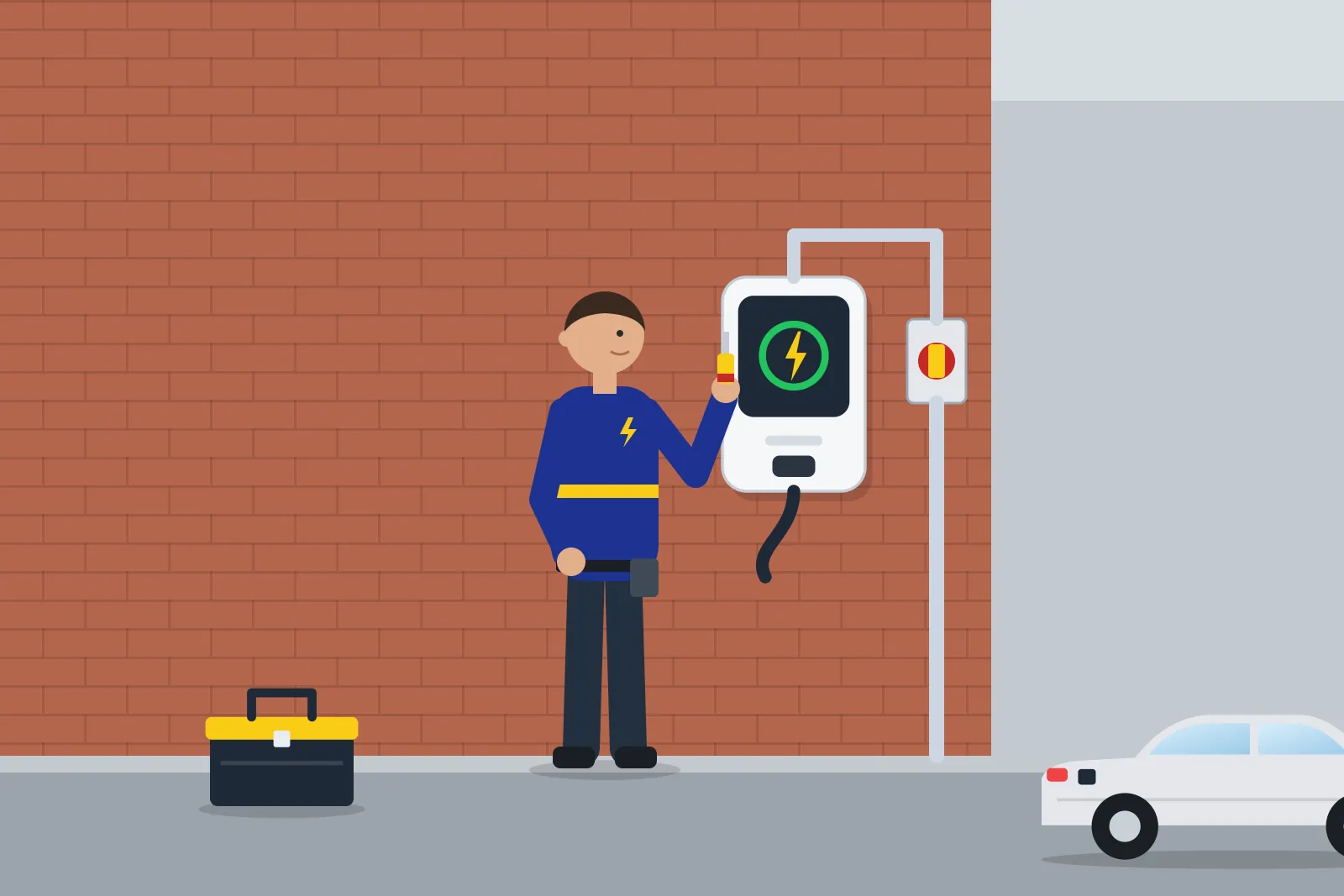
A typical installation starts with a survey, either in person or from photos. The installer checks your main fuse rating and existing electrical demand, inspects the consumer unit, confirms the earthing arrangement and plans the cable route and charger position. They'll also ask how far the car's charging port will be from the wall.
On the day, the electrician fits the charger, runs a dedicated circuit back to the consumer unit with suitable protection and connects the charger to Wi-Fi or a mobile signal so its smart features work. A straightforward job is often finished in a few hours; longer cable runs, groundwork or a consumer unit upgrade take longer.
Afterwards you should receive an electrical installation certificate and confirmation that the installation has been notified to the local distribution network operator, which installers are expected to do for chargepoints.
Can my home have an EV charger?
If you can park on your own drive or in a garage, you can very likely have a home charger. The main things an electrician will look at are:
- Off-street parking – cables can't normally be run across a public pavement
- The capacity of your electricity supply and main fuse
- Space in your consumer unit, or whether a new board is needed
- How your home is earthed and whether extra protection is required
- The distance and route from the consumer unit to the charger
- A Wi-Fi or mobile signal at the charger position for smart features
Choosing a home charger
Most home chargers in the UK charge at up to around 7kW on a standard single-phase supply. Faster 22kW chargers need a three-phase supply, which very few homes have, so for most people 7kW is the practical choice and comfortably refills a typical car overnight.
Tethered chargers have the cable permanently attached – convenient for everyday use. Untethered chargers have a socket, so you use your own cable; they look neater and suit households with more than one type of car. Chargers installed in homes in Great Britain generally have to meet smart charge point regulations, which let you schedule charging for cheaper off-peak times.
Some chargers include load management, which automatically reduces the charging rate if the rest of the house is using a lot of power. That can avoid the need for a supply upgrade in some homes. Your installer can recommend models that suit your supply, car and tariff.
Replacing, moving or upgrading a charger
Older chargers may lack the smart features newer tariffs rely on, or stop being supported by their manufacturer. Replacing a charger on an existing, suitable circuit is usually quicker than a new installation, but the electrician should still test the circuit and check the protection meets current requirements.
If you're building an extension, changing your driveway or switching to a car with its charging port on the other side, moving the charger can make daily life easier. Mention any plans when you request quotes so the installer can position it for the long term.
When to arrange a home charger
Ideally, before your electric car arrives, so you're not relying on public chargers or a domestic socket in the meantime. Installers can usually fit a charger within a few weeks of a survey, though network operator approval can occasionally add time where a supply upgrade is needed.
If you're planning other electrical work – a new consumer unit, an extension or a rewire – it often makes sense to install the charger circuit at the same time.
Rules, safety and certification
- Fitting a charger means adding a new circuit, which is notifiable electrical work in England and Wales. Use an electrician who can self-certify the work under building regulations, and keep your certificate.
- Installers should notify the local distribution network operator about the chargepoint, and in some cases get approval before connecting it.
- Home chargers in Great Britain generally have to meet smart charge point regulations, including off-peak scheduling and security requirements.
- Grant schemes have changed over time. Check GOV.UK for any current support, which has mainly been aimed at people who live in flats or rent their home.
- Never run a charging cable across a public pavement without permission from the council, and don't use extension leads to charge a car.
Typical EV charger installation prices
Indicative UK prices for a home charger supplied and fitted by a qualified electrician, including VAT where the electrician is VAT-registered. They vary with the charger model, the cable run and any upgrades your installation needs.
| Job | Typical UK price |
|---|---|
| Standard 7kW home charger, supplied and fitted | £800–£1,200 |
| Charger with a longer cable run or groundwork | £1,100–£1,700 |
| Replacing an existing charger on a suitable circuit | £600–£1,000 |
| Consumer unit upgrade, if needed | £450–£900 |
| Additional earthing work, if needed | £100–£300 |
| Moving an existing charger | £250–£600 |
Prices are indicative only and include VAT where the electrician is VAT-registered. Always get written quotes for your specific job.
More examples, including rewiring, consumer units, EICRs and day rates, are in our electrician prices guide.
What affects the price
- Charger model
- Prices vary between brands and features such as tethered cables, load management and app control.
- Cable run
- The further the charger is from the consumer unit, the more cable, drilling and time the job needs.
- Consumer unit
- A full or older board may need replacing before a new circuit can be added.
- Earthing and protection
- Some homes need extra earthing work or protective devices for the charger circuit.
- Groundwork
- Chargers on a detached garage or across a drive may need trenching and ducting.
- Supply capacity
- Homes with a smaller main fuse or high demand may need load management or a supply upgrade.
Comparing EV charger quotes
- The exact charger make and model, and whether it's tethered
- The cable route and where the charger will be mounted
- Whether any consumer unit or earthing work is included
- How load management will be handled, if needed
- Who notifies the network operator
- Certification and building regulations notification
- App set-up and a demonstration of the charger
- Warranty on the charger and on the installation
Request EV charger quotes
Describe the job, add your postcode and compare quotes from local electricians. It's free, and you're under no obligation to go ahead.
Get free EV charger quotes
Describe your electrical job once and compare quotes from local electricians who cover your area.
- Free to use
- No obligation
- Compare local electricians
- Quick online form
You'll continue to our quotes partner, MyJobQuote, to describe your electrical job.
Electric Car Charging near you
You can request EV charger quotes anywhere in the UK. These cities have their own local ev chargers page:
Electricians in more towns and cities
Guides for ev chargers and electrical work
- Home EV chargers: what to know before you get quotesHome charging is cheaper and more convenient than public charging. Here's what installers will ask and how to choose a charger.
- Tethered or untethered EV charger?It's one of the first choices you'll make when getting a home charger, and there's no wrong answer – just the one that suits how you live.
- 7kW or 22kW home charger?Bigger numbers sound better, but for most homes the choice is made for you. Here's why – and why it rarely matters overnight.
- Can you charge an EV from a normal plug?Technically yes. Practically, it's the emergency option rather than the everyday one. Here's why.
- EV charging without a drivewayMillions of people in the UK park on the street. That doesn't rule out an electric car – it just means planning your charging a little differently.
- How to choose an electricianA good electrician leaves you with safe, tidy, certified work. These are the checks worth making before you agree to anything.
Electric Car Charging: frequently asked questions
How much does it cost to install a home EV charger?
As a rough guide, a standard 7kW home charger supplied and fitted often costs somewhere between £800 and £1,200. Longer cable runs, groundwork, earthing work or a consumer unit upgrade add to that. Compare written quotes for your property.
How long does a home charger installation take?
A straightforward installation is often done in half a day. Longer cable runs, groundwork or a consumer unit upgrade can extend it to a full day or more.
Can I charge my car from a normal socket?
Most cars come with a cable that can be used with a standard socket for occasional charging, but it's slow and puts a sustained load on the socket. A dedicated home charger is safer and faster for regular use.
Do I need a smart charger?
Chargers installed in homes in Great Britain generally have to meet smart charge point regulations. Smart features also let you charge when electricity is cheaper.
Can I have a charger if I live in a flat?
It depends on whether you have an allocated parking space and permission from the freeholder or management company. Some blocks install shared chargers. Check GOV.UK for any grants for flat owners and renters.
Will I need a new consumer unit?
Not always. If your board has space and suitable protection, the charger circuit can be added to it. Older or full boards are often replaced at the same time.