Check they can certify the work
In England and Wales, a lot of domestic electrical work – new circuits, consumer unit replacements and work in bathrooms, for example – is notifiable under Part P of the Building Regulations. Electricians registered with a government-approved competent person scheme can self-certify that work and notify the local authority for you.
If an electrician isn't registered, notifiable work has to go through building control separately, which adds cost and time. You can check an electrician's registration on the scheme's own website or the government's competent person register. In Scotland and Northern Ireland the rules are different, so ask how the electrician will certify the work.
Ask about insurance and experience
Ask whether the electrician has public liability insurance, and if the job is a big one, whether they have done similar work recently. Experience with your type of property – a listed building, a tenement flat, a large rental – makes a real difference.
For specialist work such as EV chargers, ask whether they install chargers regularly and which models they recommend. For commercial premises, check they're used to working in businesses like yours.
Need an electrician?
Describe the job and compare free quotes from local electricians near you.
- Free to use
- No obligation
- Compare local electricians
- Quick online form
You'll continue to our quotes partner, MyJobQuote, to describe your electrical job.
Get the quote in writing
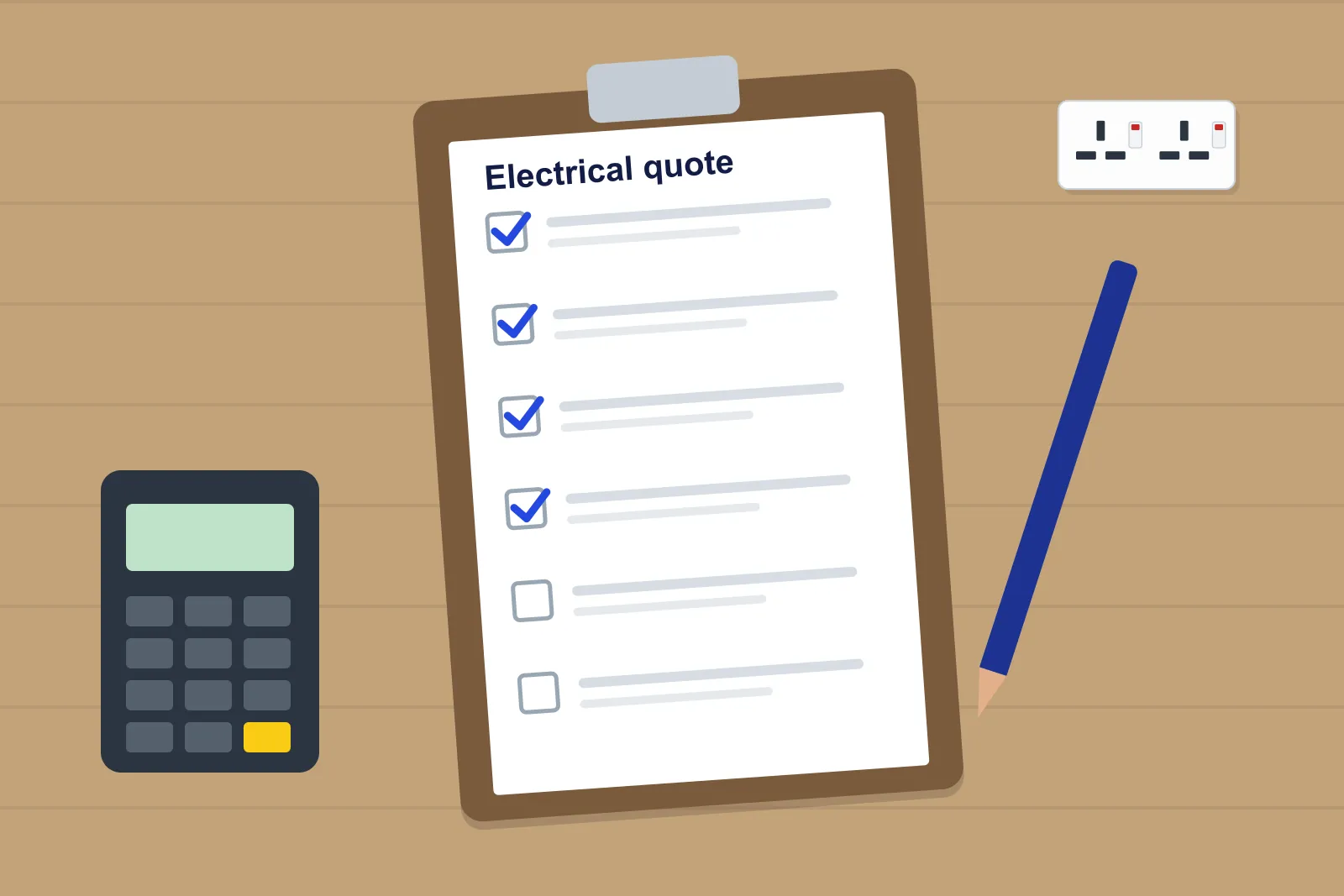
A written quote protects both of you. It should describe exactly what's included – the number of sockets and lights, the consumer unit model, whether making good is included, testing and certification – and what isn't.
Be wary of vague quotes, pressure to decide on the spot or requests for full payment up front. A deposit for materials on larger jobs is normal; paying everything before work starts is not.
- A clear description of the work and the materials
- Whether plastering and making good are included
- Testing, certification and building regulations notification
- Start date, expected duration and payment terms
- How any extra work found during the job will be priced
Questions worth asking
A short conversation tells you a lot. Good electricians explain what they'll do in plain English and are happy to answer questions.
- Will you need to inspect the existing installation first?
- Who will do the work – you or someone in your team?
- How will you protect floors and furniture, and clear up each day?
- Will the power be off, and for how long?
- What guarantee do you offer on your work?