Why most homes get 7kW
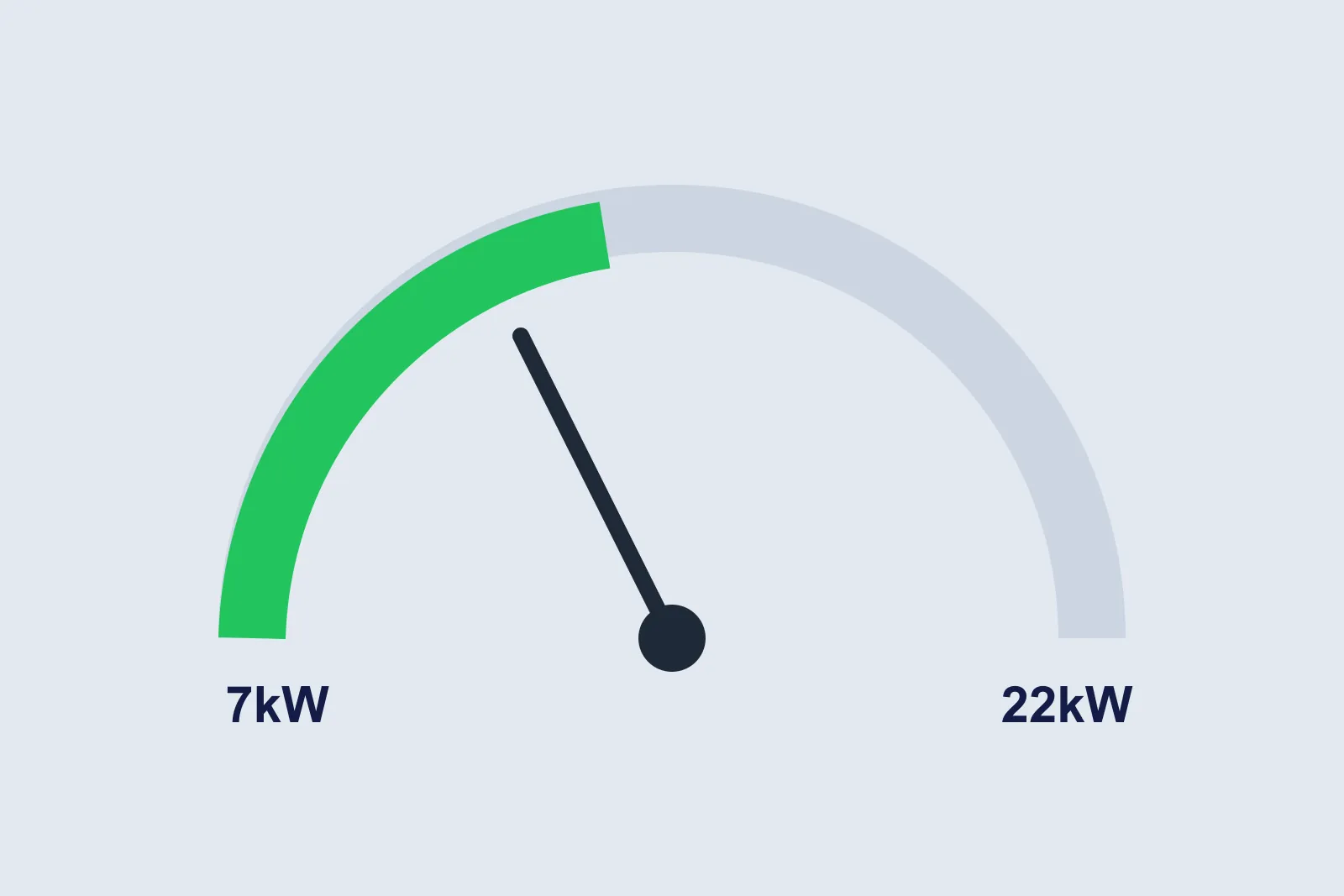
Most UK homes have a single-phase electricity supply. On single phase, the practical maximum for a home charger is around 7kW. That's enough to add a good amount of range every hour and fully charge many cars overnight.
What 22kW needs
A 22kW charger needs a three-phase supply, which is rare in homes and expensive to have installed. Even with one, many cars can only accept 7kW or 11kW from an AC charger, so you wouldn't necessarily get the full speed.
Need an electrician?
Describe the job and compare free quotes from local electricians near you.
- Free to use
- No obligation
- Compare local electricians
- Quick online form
You'll continue to our quotes partner, MyJobQuote, to describe your electrical job.
Your car has a say too
Every EV has an onboard charger that limits how fast it can take AC power. Check your car's specification. If it maxes out at 7kW, a faster home charger won't make any difference.