Typical lifespans
Electrical installations don't have an expiry date, but components wear and standards change.
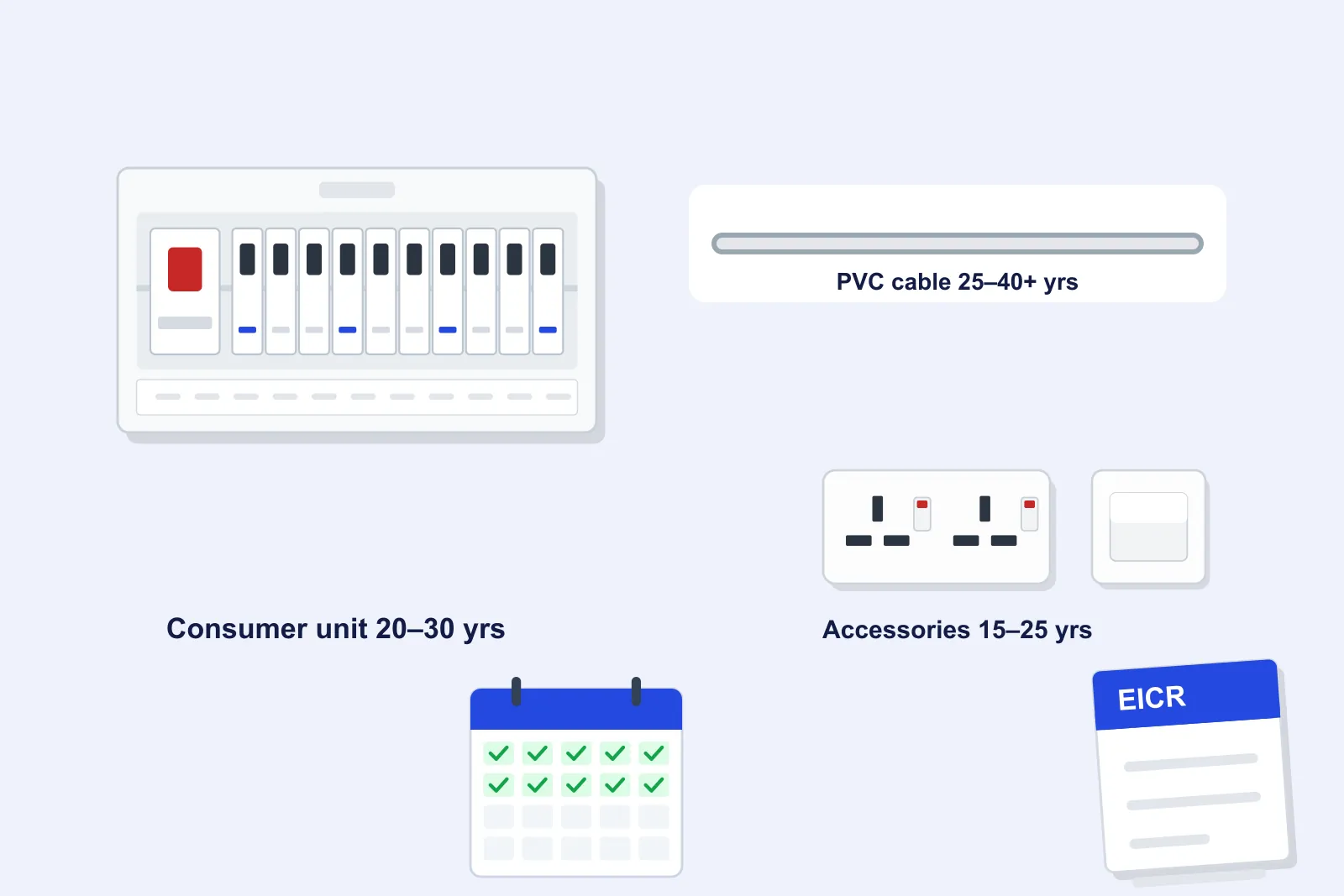
| Component | Typical lifespan |
|---|---|
| PVC-insulated cables | 25 – 40+ years |
| Rubber-insulated cables (pre-1960s) | Past their safe life |
| Consumer unit | 20 – 30 years |
| Sockets and switches | 15 – 25 years |
| Smoke alarms | Around 10 years |
Typical lifespans of electrical components
What affects lifespan
- Heat – overloaded circuits age cables faster
- Damage – drilling, rodents, DIY alterations
- Moisture
- Quality of the original installation
Need an electrician?
Describe the job and compare free quotes from local electricians near you.
- Free to use
- No obligation
- Compare local electricians
- Quick online form
You'll continue to our quotes partner, MyJobQuote, to describe your electrical job.
Testing
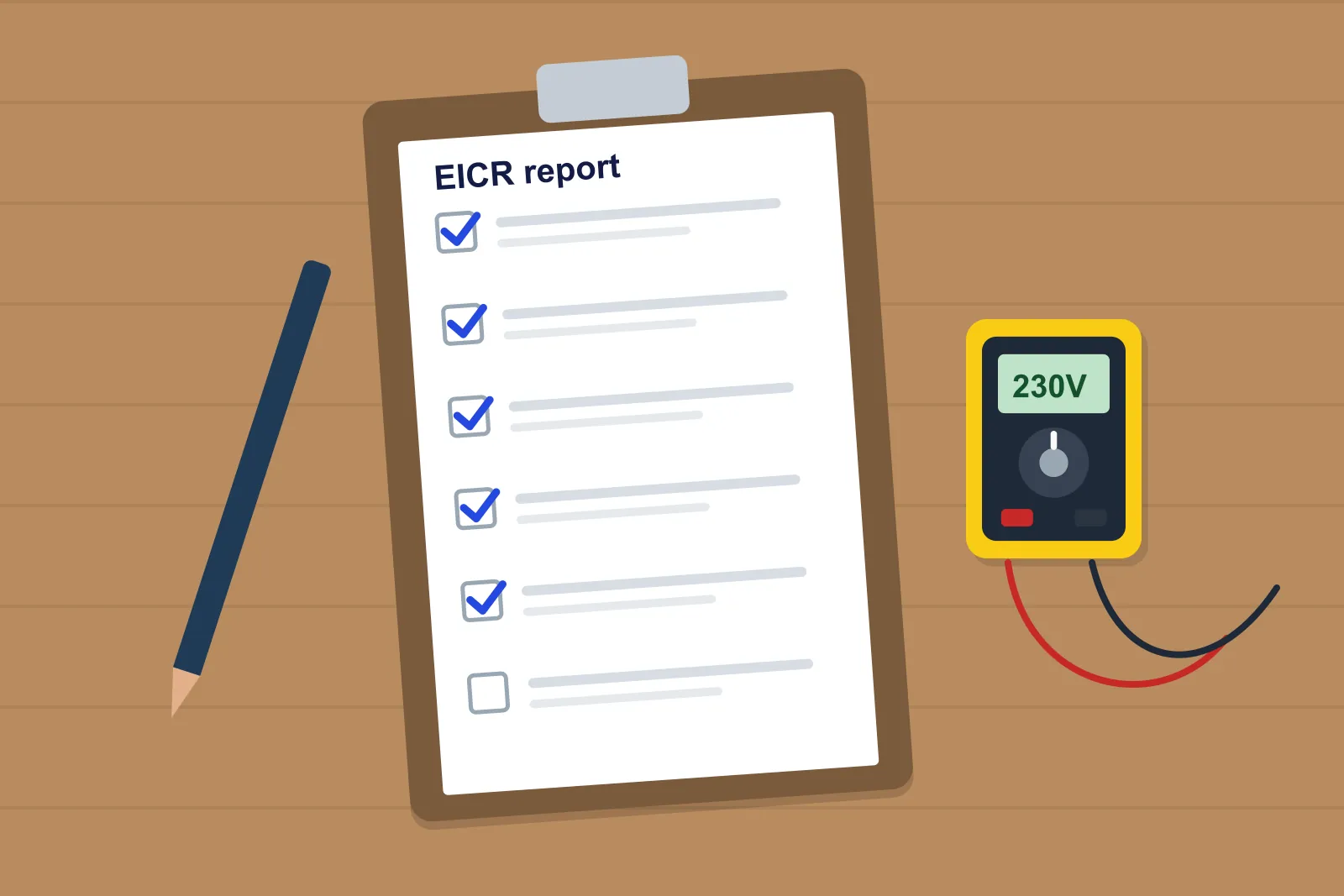
An Electrical Installation Condition Report (EICR) checks the condition of your installation. It's recommended every 10 years for owner-occupied homes and every 5 years for rented homes. See EICR electrical safety reports explained.
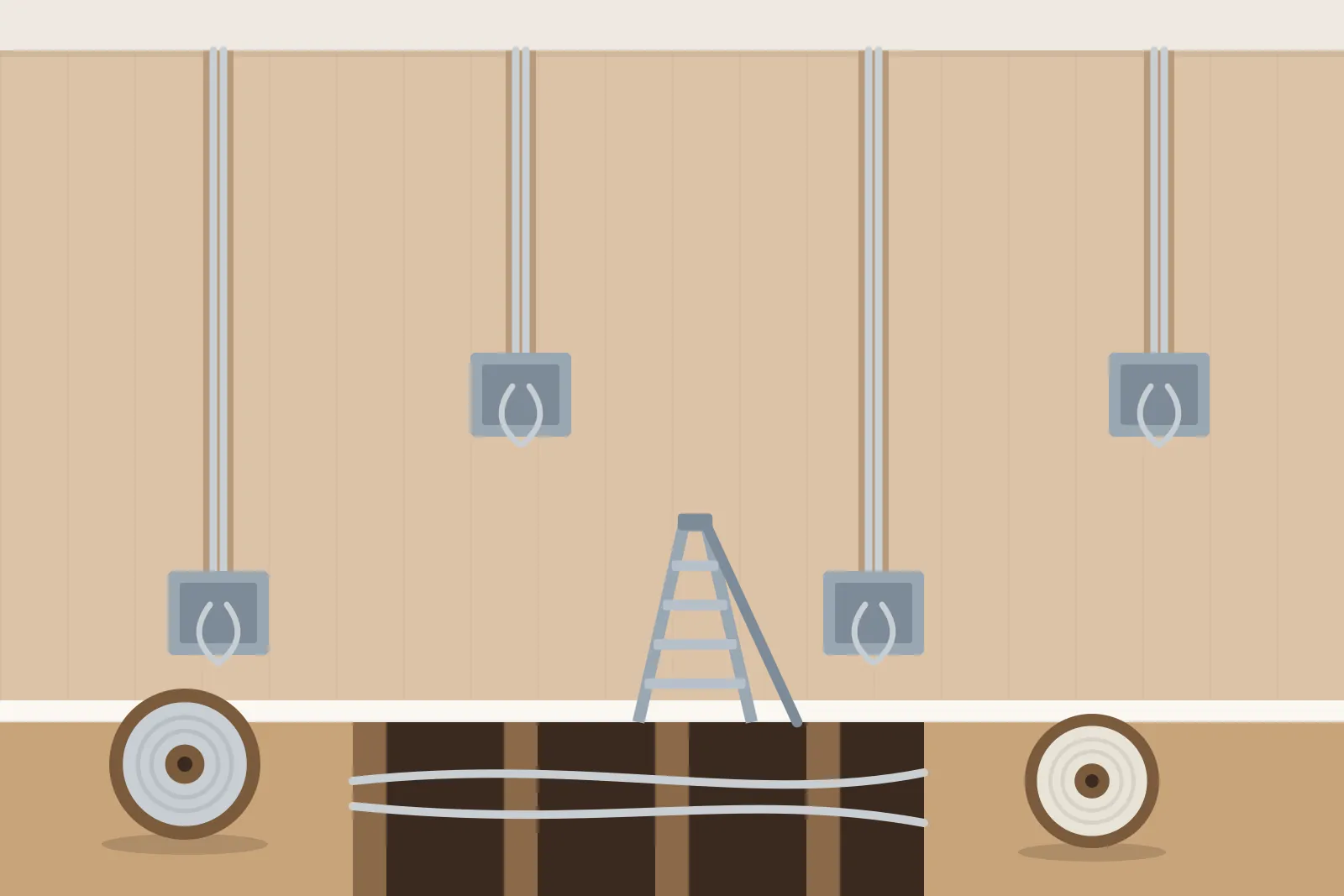
When to rewire
If your wiring is old, damaged or doesn't meet modern needs, a rewire may be needed. See how much does a rewire cost. Get quotes from local electricians.