Immediate safety
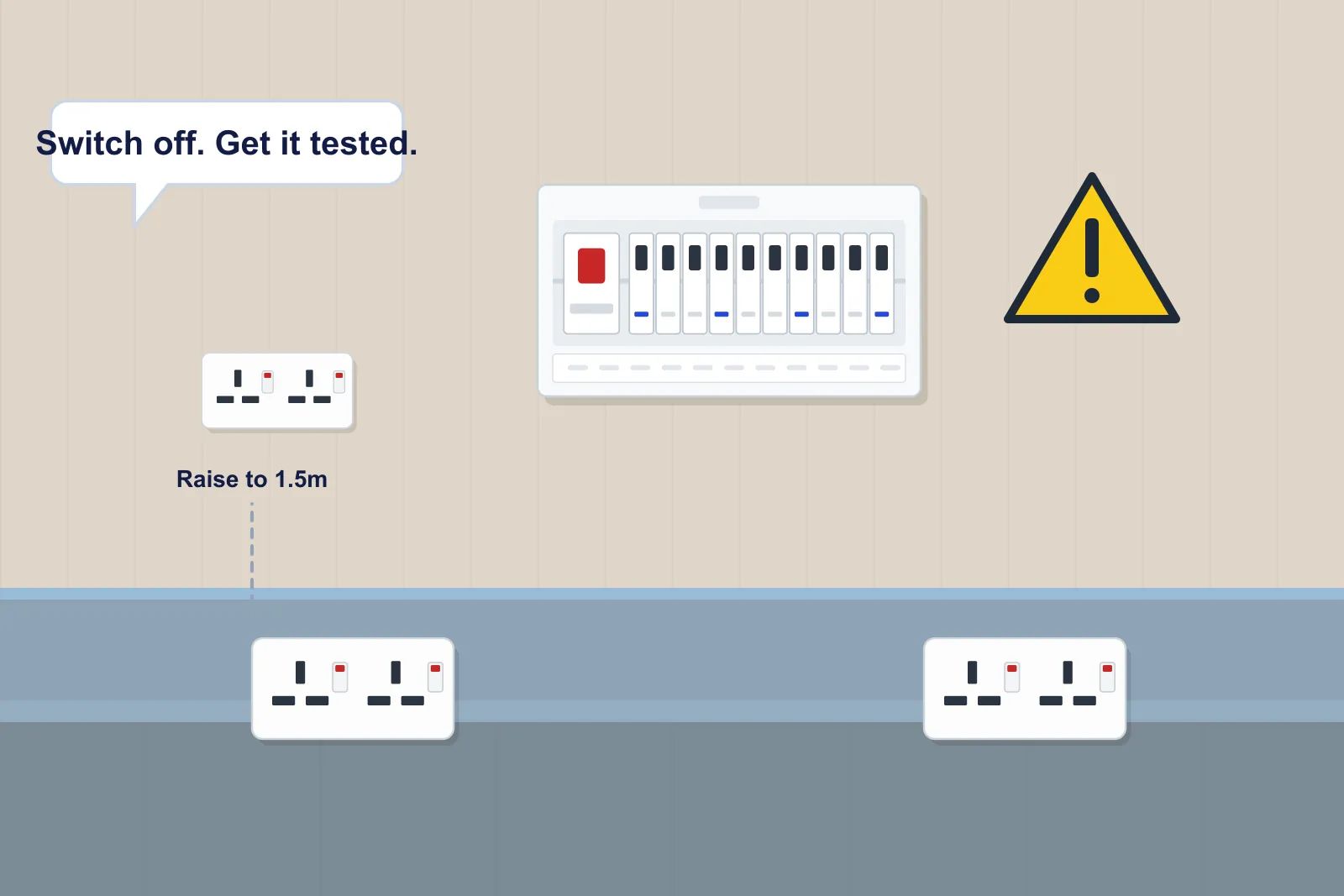
Water coming through a ceiling near light fittings is a common emergency. If you see water dripping from a light, switch off at the consumer unit and don't use the lights. See power cut: what to do and electrical faults: what to do.
- Don't touch switches, sockets or appliances if you're standing in water
- If it's safe to reach the consumer unit without standing in water, switch off the main switch
- If it isn't safe, leave the property and call your network operator on 105
- Don't switch anything back on until an electrician has checked it
- Keep away from fallen or damaged overhead cables and call 105
What an electrician will check
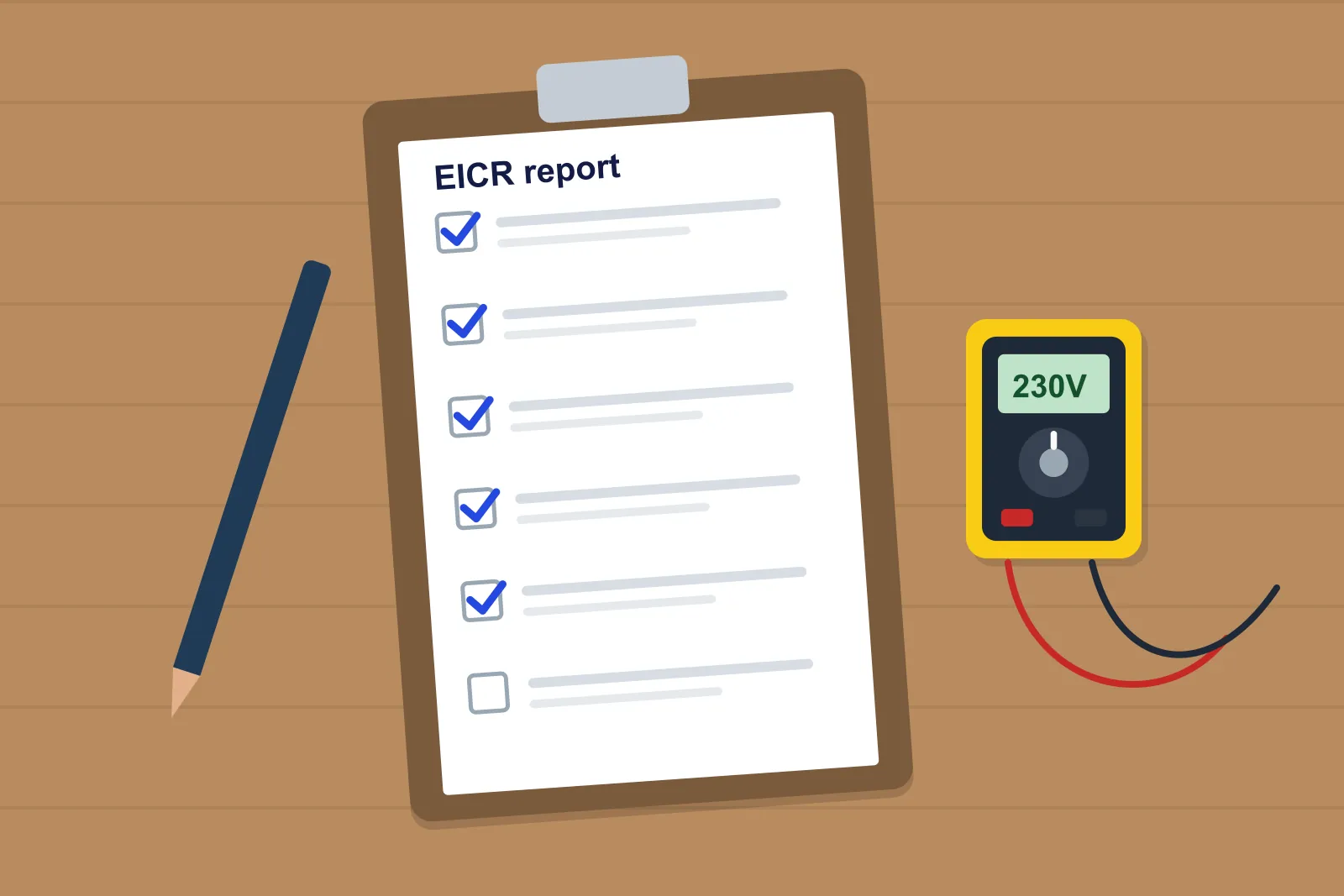
Once the water has gone, an electrician will inspect and test the installation to find out what's been affected. They'll look at which circuits, sockets, switches, light fittings and cables were wet, test insulation resistance on each circuit, and check the consumer unit itself. Often they'll isolate affected circuits and restore power to dry parts of the house so you can stay or return sooner.
The result is usually a report or an Electrical Installation Condition Report showing what's safe, what needs drying and what must be replaced. See EICR explained.
What usually needs replacing
Flood water is often contaminated, which can damage cable sheaths and terminals even after drying. Cables in walls may be fine once dry, but anything submerged for a long time is often replaced.
| Item | Usual approach |
|---|---|
| Sockets and switches that were submerged | Replace |
| Consumer unit that got wet | Replace |
| RCDs, MCBs and RCBOs that got wet | Replace |
| Cables that were submerged | Test; replace if insulation is damaged or contaminated |
| Light fittings wet from a leak above | Dry, test, replace if damaged |
| Appliances that were submerged | Don't use; get them checked or replaced |
| Smoke alarms affected by water | Replace |
Typical treatment of flood-affected electrical parts
Need an electrician?
Describe the job and compare free quotes from local electricians near you.
- Free to use
- No obligation
- Compare local electricians
- Quick online form
You'll continue to our quotes partner, MyJobQuote, to describe your electrical job.
Resilient rewiring
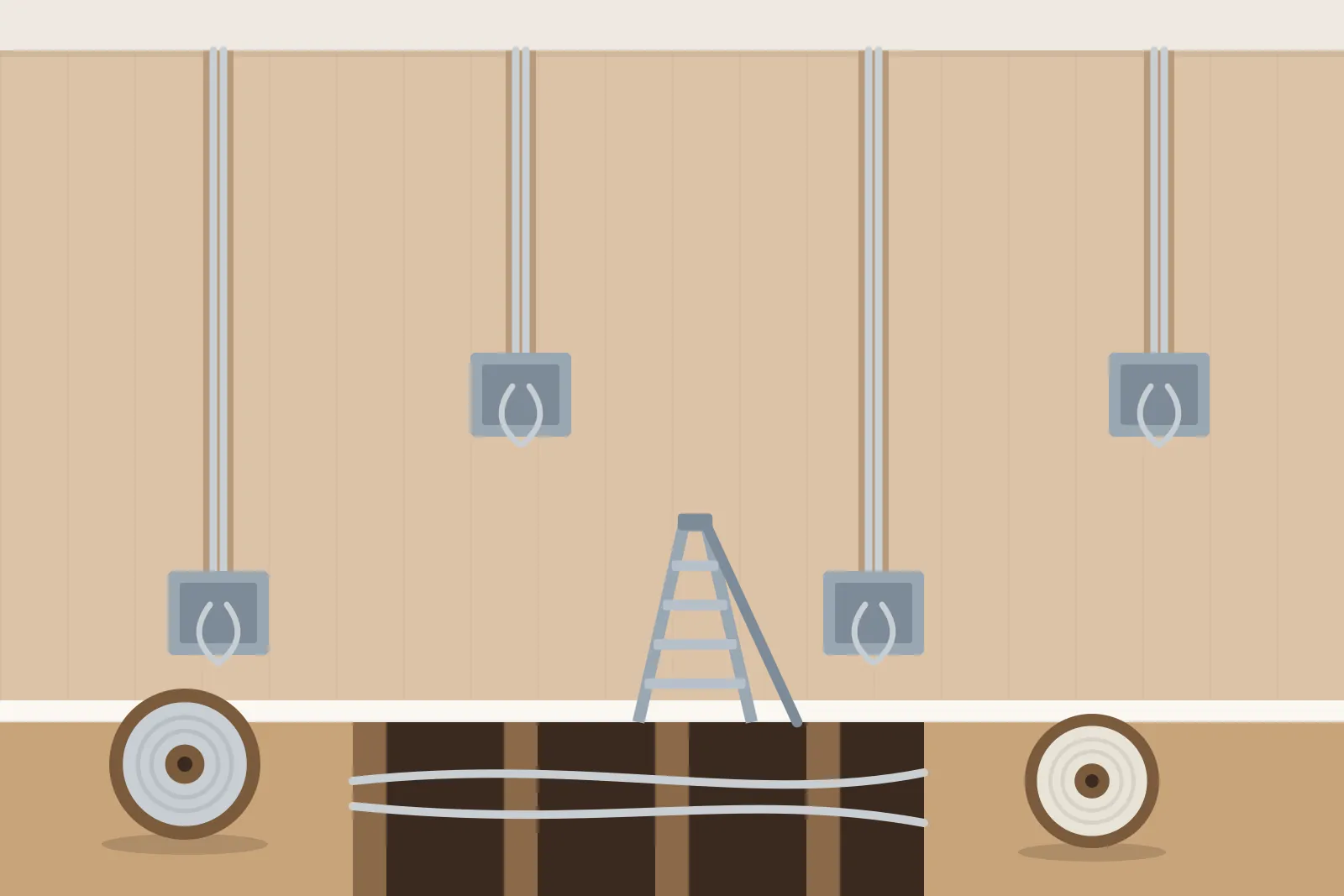
If your home is at risk of flooding again, it's worth making the electrics more resilient during repairs. Common measures include raising sockets to at least 1.5m above floor level on the ground floor, running cables down from the ceiling rather than up from the floor, and moving the consumer unit and meter higher. See signs your house needs rewiring and how much a rewire costs.
Insurance and costs
Flood and escape-of-water damage is usually covered by buildings insurance. Take photos, keep damaged items until the insurer says otherwise, and ask your electrician for written reports. Contact local electricians for an urgent inspection.
| Job | Typical cost |
|---|---|
| Emergency make-safe visit | £100 – £250 |
| Inspection and test after a leak | £150 – £350 |
| Replace consumer unit | £500 – £1,000 |
| Partial rewire of ground floor | £2,000 – £5,000 |
| Full rewire of a flooded three-bed house | £5,000 – £9,000 |
Indicative post-flood electrical costs (2026)