When the power trips
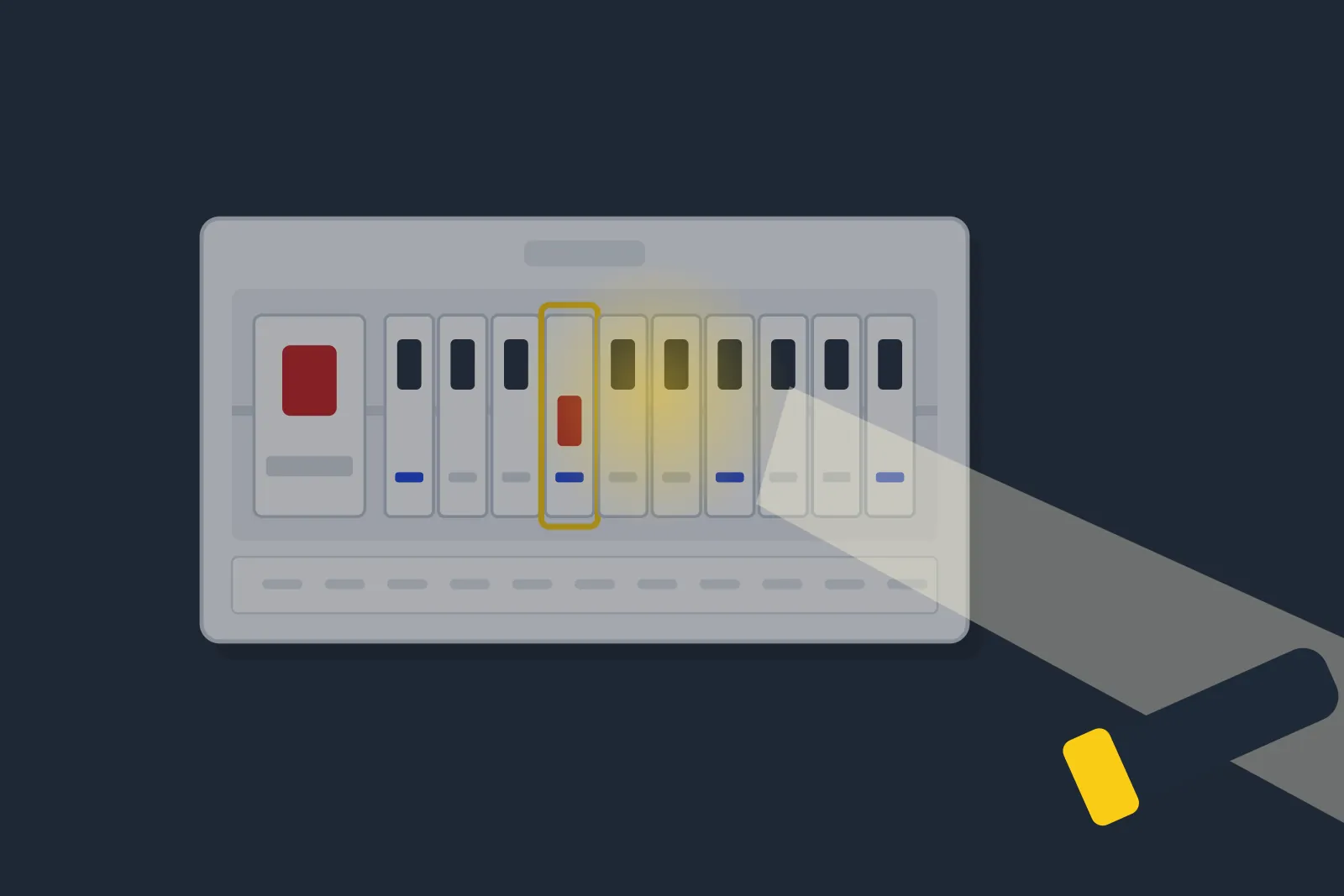
Modern consumer units have circuit breakers and RCDs that switch off when they detect a problem. A single trip after a bulb blows or an appliance fails isn't unusual. Repeated trips are a sign something needs investigating.
It's safe to note which switch has tripped, unplug appliances on that circuit and try resetting it once. If it trips again straight away, or keeps tripping, leave it off and call an electrician.
Warning signs that need prompt attention
Stop using the affected socket or fitting and contact an electrician if you notice:
- A burning smell or scorch marks around a socket or switch
- Sockets or switches that are warm to the touch
- Buzzing, crackling or sparking
- Lights that dim or flicker when appliances switch on
- A shock or tingle from an appliance or fitting
- Damaged or exposed cables
Need an electrician?
Describe the job and compare free quotes from local electricians near you.
- Free to use
- No obligation
- Compare local electricians
- Quick online form
You'll continue to our quotes partner, MyJobQuote, to describe your electrical job.
How electricians find faults
Fault finding is systematic. The electrician tests circuits one by one, measures insulation resistance and continuity, and isolates parts of the installation until the cause is found. Intermittent faults can take longer, and sometimes need a second visit.
Common causes include water getting into outdoor fittings, damaged cables, loose connections and faulty appliances. Once found, the electrician will explain the repair and give you a price.
Emergencies
If there's smoke, fire or someone has had a serious shock, call 999. If the whole street has lost power, it's likely a network fault – call 105, the free national power cut number in England, Scotland and Wales. In Northern Ireland, contact NIE Networks.
For electrical faults inside your property that are dangerous – burning smells, sparking or exposed live parts – switch off at the main switch if it's safe to do so and call an electrician.