How PIR lights work
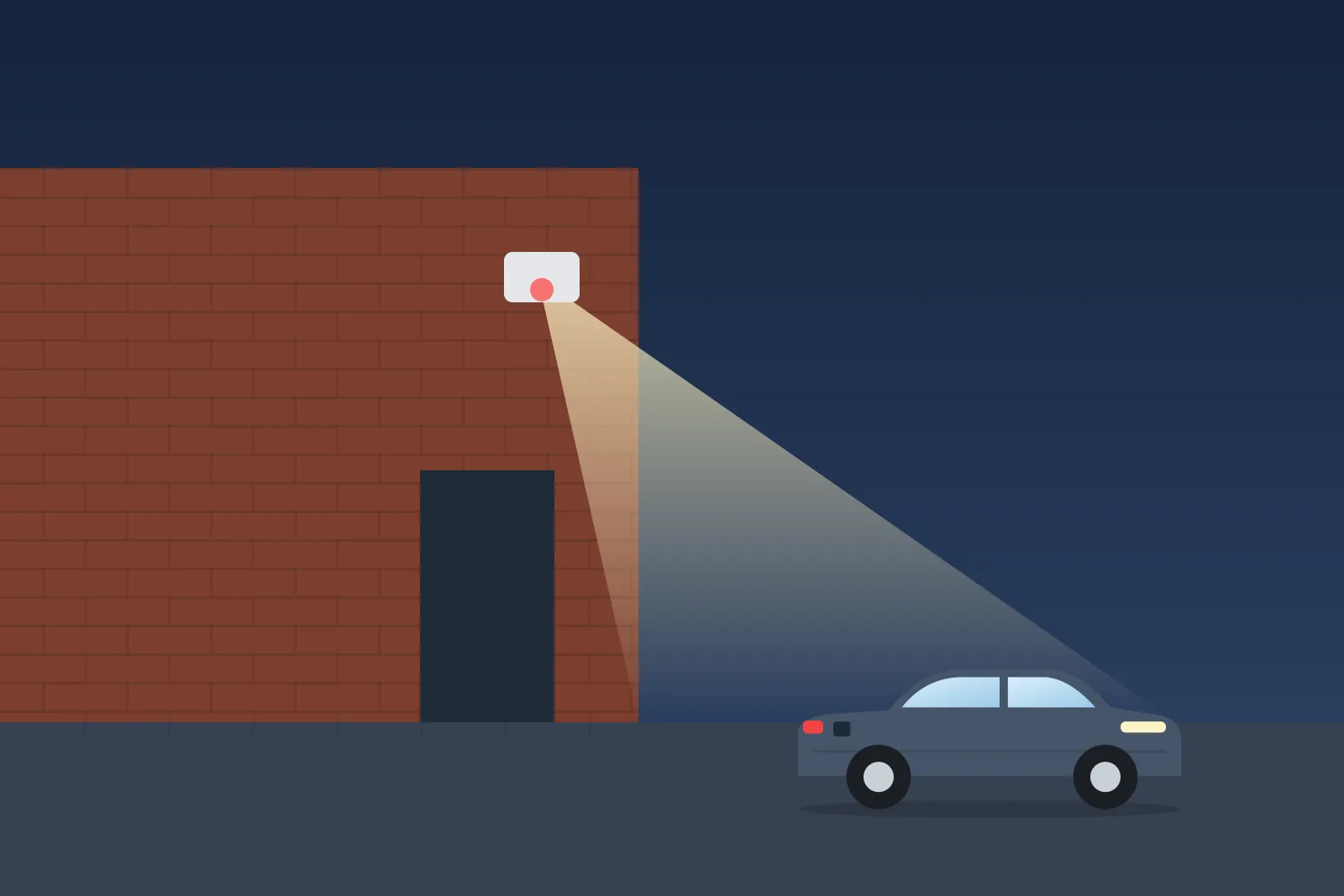
A PIR (passive infrared) sensor detects heat and movement. When someone walks into its range, the light switches on for a set time. Most include a light sensor so they only work after dark.
Positioning matters
- Mount high enough to be out of easy reach, but within the sensor's recommended height
- Aim at paths, doors and drives you actually use
- Avoid pointing at the road, where passing cars and people will trigger it
- Angle the light downwards so it doesn't glare into neighbours' windows
- Keep sensors away from trees and bushes that move in the wind
Need an electrician?
Describe the job and compare free quotes from local electricians near you.
- Free to use
- No obligation
- Compare local electricians
- Quick online form
You'll continue to our quotes partner, MyJobQuote, to describe your electrical job.
Settings to tweak
Most PIR lights let you adjust how long they stay on, how sensitive they are and at what light level they start working. A minute or two is usually plenty. Very high sensitivity can mean cats and foxes set them off all night.
Installation
Replacing an existing outdoor light with a PIR version is often straightforward. New outdoor lights may need a new circuit or an extension of an existing one, with RCD protection and weatherproof fittings.