Will a ceiling fan work in your room?
UK ceilings are often lower than those in countries where fans are common, so height is the first check. The blades should be at least 2.3m above the floor for safety. In a room with a standard 2.4m ceiling, that means a low-profile or 'hugger' fan that mounts close to the ceiling. Rooms with higher ceilings can take a fan on a downrod, which moves more air.
Size the fan to the room. As a rough guide, a 36-inch (90cm) fan suits a small bedroom, 42–48 inches (105–120cm) a typical bedroom or living room, and 52 inches (130cm) or more a large open-plan space.
| Room size | Typical fan diameter |
|---|---|
| Up to 9m² (small bedroom, office) | 76 – 91cm (30–36 in) |
| 9 – 16m² (bedroom) | 91 – 107cm (36–42 in) |
| 16 – 25m² (living room) | 107 – 132cm (42–52 in) |
| Over 25m² or open plan | 132cm+ (52 in+) or two fans |
Ceiling fan sizes by room
Fixing the fan safely
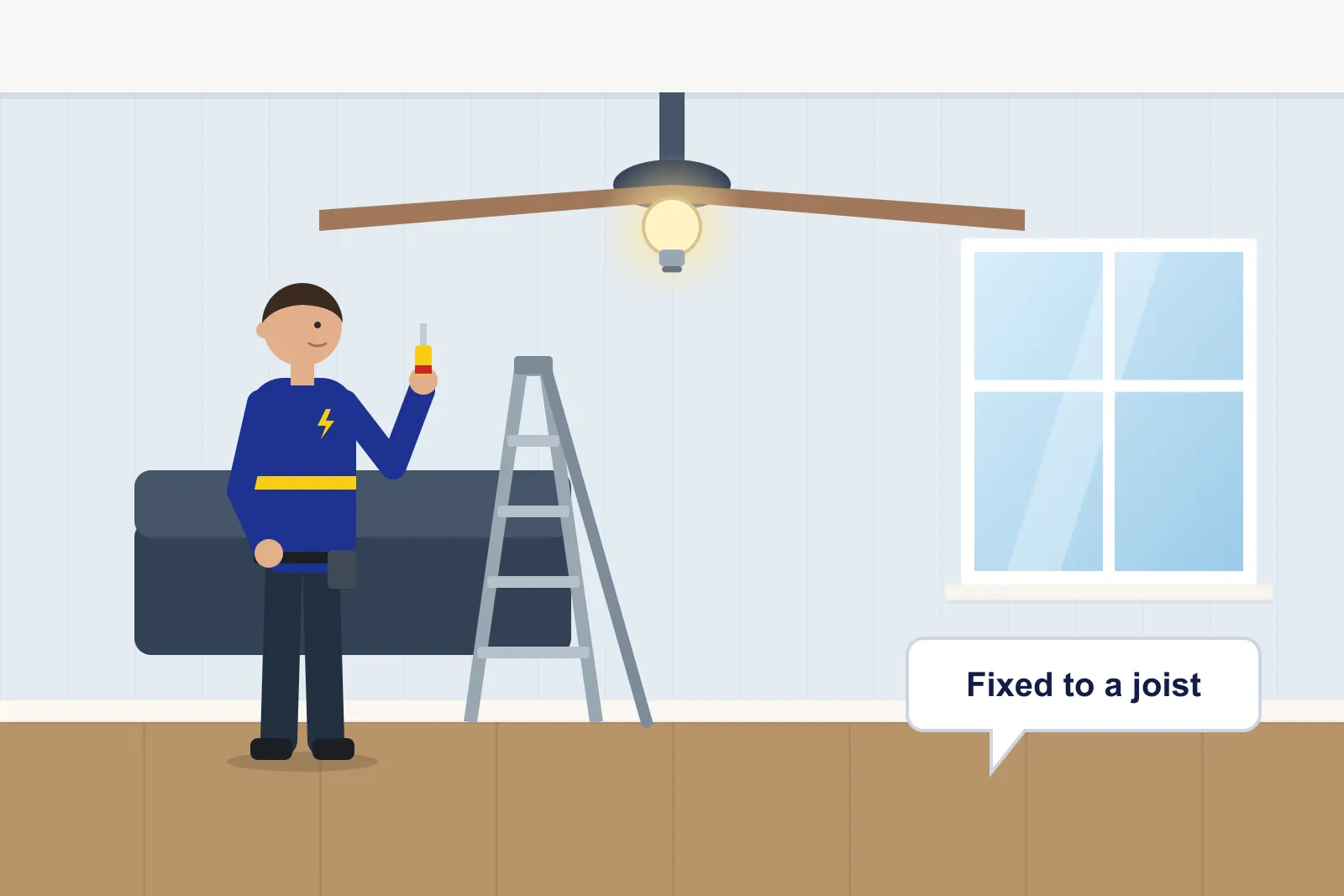
A ceiling fan is heavier than most light fittings and it moves, which creates vibration. It must be fixed into a joist or a timber noggin fitted between joists – never just into plasterboard or a plastic ceiling rose. If the existing light isn't on a joist, the electrician may need to cut a small access hole, fit a noggin and make good the ceiling afterwards.
In flats with concrete ceilings, a heavy-duty anchor is used instead. Your electrician will check the fixing point before fitting.
Wiring and controls
Most fans are wired into the existing lighting circuit, replacing a ceiling light. How you control the fan determines how much wiring is needed:
- Pull chain or remote control only – easiest, uses the existing switch as an on/off
- Remote control with a wall-mounted holder – no new wiring
- Separate switches for fan and light – needs an extra core or new cable to the switch
- Dedicated fan speed controller on the wall – needs suitable cabling
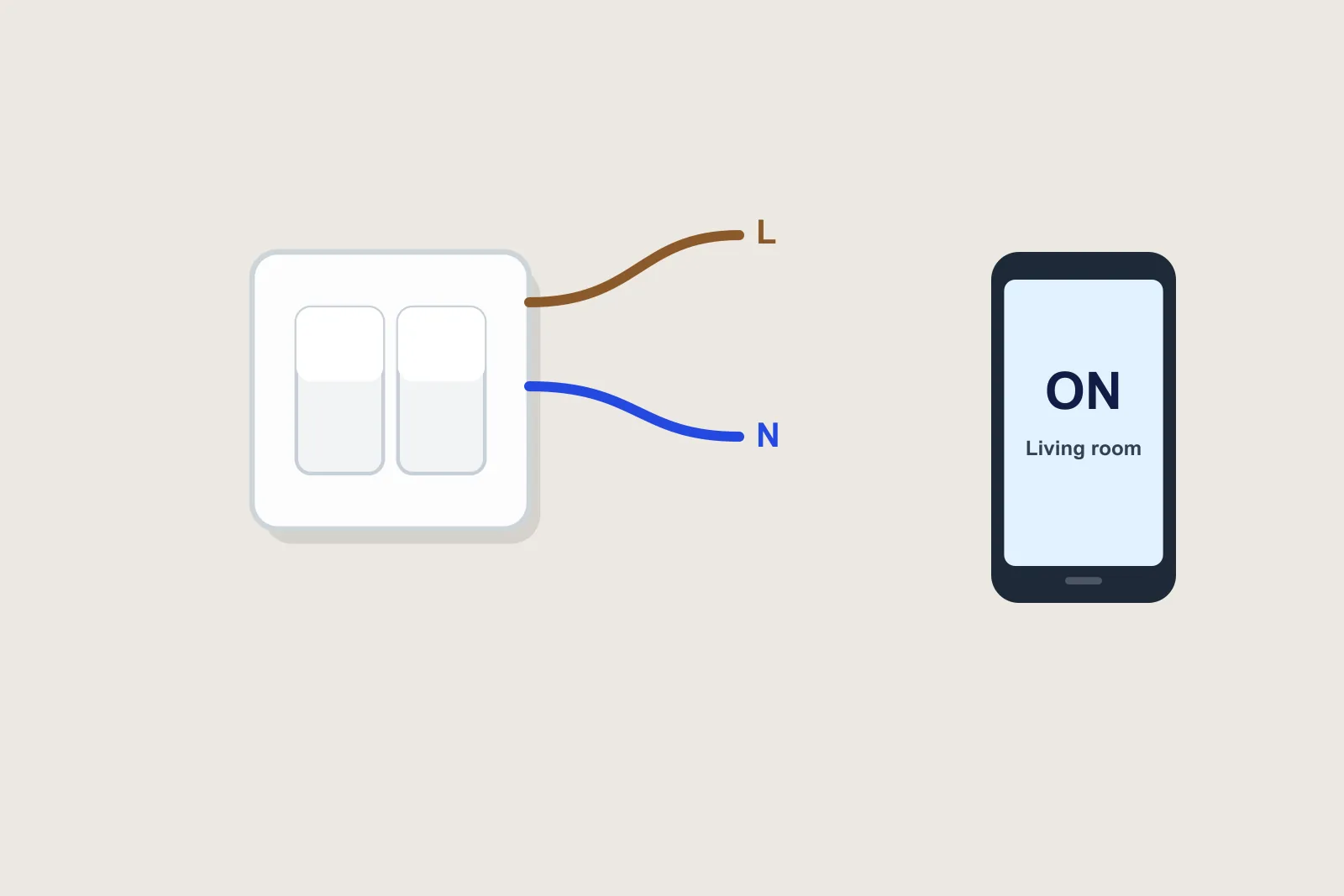
- Smart or app control – some fans need a neutral at the switch or connect by Wi-Fi
Need an electrician?
Describe the job and compare free quotes from local electricians near you.
- Free to use
- No obligation
- Compare local electricians
- Quick online form
You'll continue to our quotes partner, MyJobQuote, to describe your electrical job.
Building Regulations and certificates
Replacing a ceiling light with a fan on the same circuit is usually minor work that isn't notifiable under Part P in England, but it must still be done safely and tested. If new circuits or work in a bathroom are involved, it may be notifiable. A registered electrician can self-certify the work and should provide a Minor Electrical Installation Works Certificate. See Part P explained and electrical certificates explained.
Fans in bathrooms must be rated for the zone they're in. Most ceiling fans aren't suitable over a bath or shower. For bathrooms, see bathroom extractor fans.
Typical costs
Prices are higher in London and for very high ceilings that need a tower. Get quotes from local electricians and see how to choose an electrician.
| Job | Typical cost |
|---|---|
| Replace an existing light with a fan (labour) | £120 – £250 |
| Fit a noggin and make good ceiling | +£60 – £150 |
| Add a separate fan switch | +£80 – £180 |
| New fan position with new cable run | £200 – £400 |
| Ceiling fan (unit) | £80 – £500+ |
Indicative ceiling fan installation prices (2026)