Who needs emergency lighting?
There isn't a single rule for every building. The need for emergency lighting comes from the fire risk assessment, which is a legal requirement for workplaces, common parts of blocks of flats and houses in multiple occupation (HMOs). Typical situations where it's needed include:
- Larger HMOs and those with long or complex escape routes
- Common stairs and corridors in blocks of flats
- Shops, offices, cafés and other business premises
- Holiday lets and guest houses depending on size and layout
- Any building where the fire risk assessment calls for it
How emergency lights work
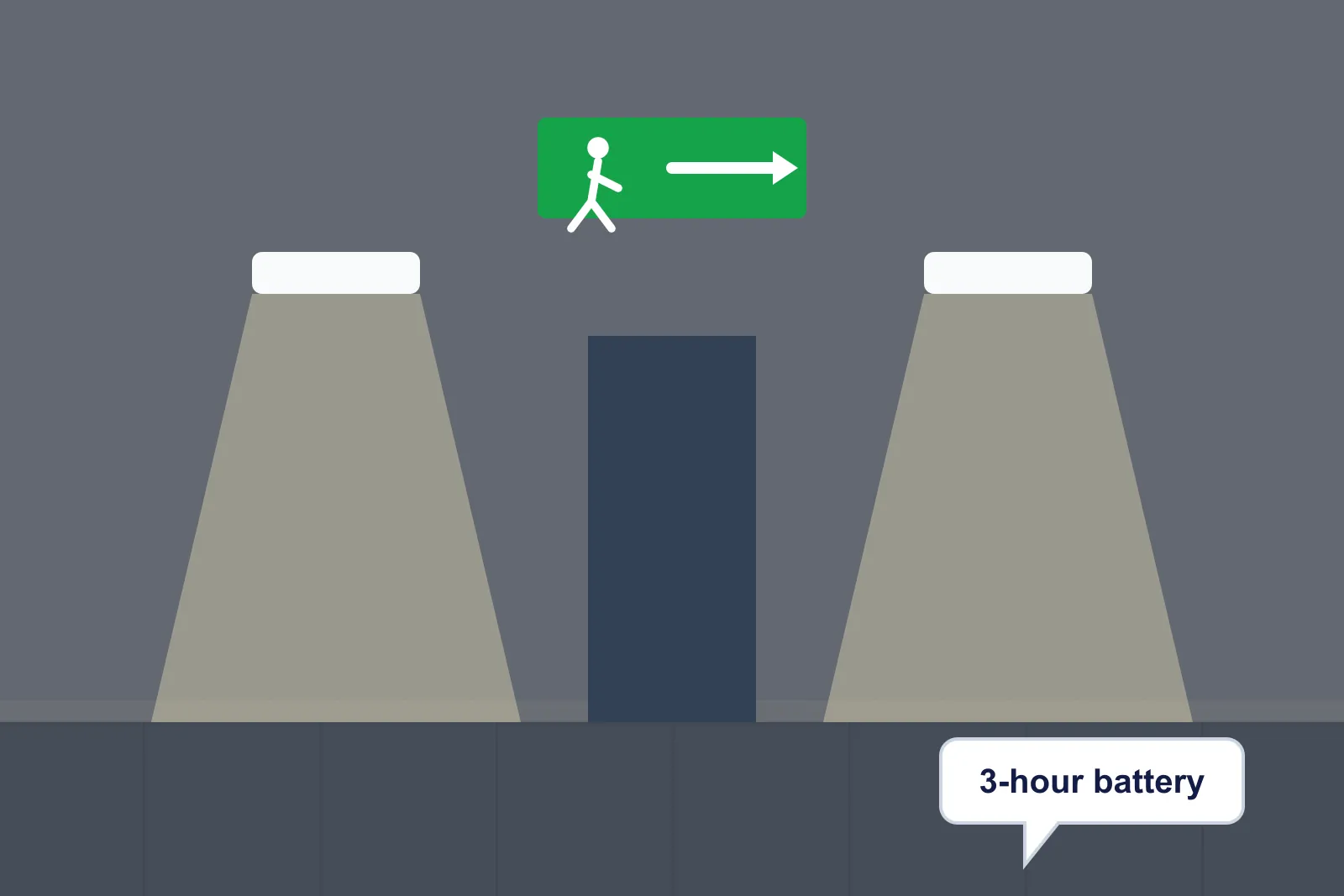
Emergency light fittings contain a battery that charges from the mains. If the mains supply fails, the light switches on automatically and runs from the battery, usually for three hours. Exit signs with running-man symbols show the way out.
| Type | How it behaves | Typical use |
|---|---|---|
| Non-maintained | Off normally; lights only when power fails | Corridors, stairs, HMOs |
| Maintained | On all the time; stays on when power fails | Exit signs, places of public entertainment |
| Self-test | Tests itself and shows faults | Reduces manual testing |
| Central battery | Lights fed from one central battery system | Larger buildings |
Types of emergency light
Testing and maintenance
Emergency lighting must be tested regularly and the results recorded. A short 'flick test' each month checks every light comes on when the supply is interrupted. A full-duration test, usually once a year, checks the batteries last for the rated time. Batteries typically need replacing every four to six years.
Many landlords and managing agents have an electrician carry out the annual test alongside other safety checks, such as an EICR. See EICR explained and landlord electrical safety rules.
Need an electrician?
Describe the job and compare free quotes from local electricians near you.
- Free to use
- No obligation
- Compare local electricians
- Quick online form
You'll continue to our quotes partner, MyJobQuote, to describe your electrical job.
Fire alarms go hand in hand
Emergency lighting and fire detection are usually considered together in the fire risk assessment. HMOs often need interlinked alarms, sometimes a full fire alarm panel. See smoke and heat alarms explained.
Typical costs
Get quotes from local electricians and ask for an emergency lighting certificate on completion.
| Job | Typical cost |
|---|---|
| Single emergency light fitted (existing lighting circuit) | £80 – £160 |
| Illuminated exit sign fitted | £90 – £180 |
| Small HMO (6–10 fittings) installed | £800 – £1,800 |
| Annual full-duration test and certificate | £100 – £250 |
| Replacement battery pack | £25 – £60 per fitting |
Indicative emergency lighting prices (2026)