The short version
An RCD – residual current device – constantly compares the electricity flowing out along a circuit with what comes back. If some of it goes missing, it's probably leaking to earth: through a damaged cable, a wet appliance or, worst case, through a person. The RCD notices the difference and cuts the power in a fraction of a second.
That speed is the whole point. It's the difference between an unpleasant jolt and a fatal shock, and it can also stop faults developing into fires.
How to tell if you've got one
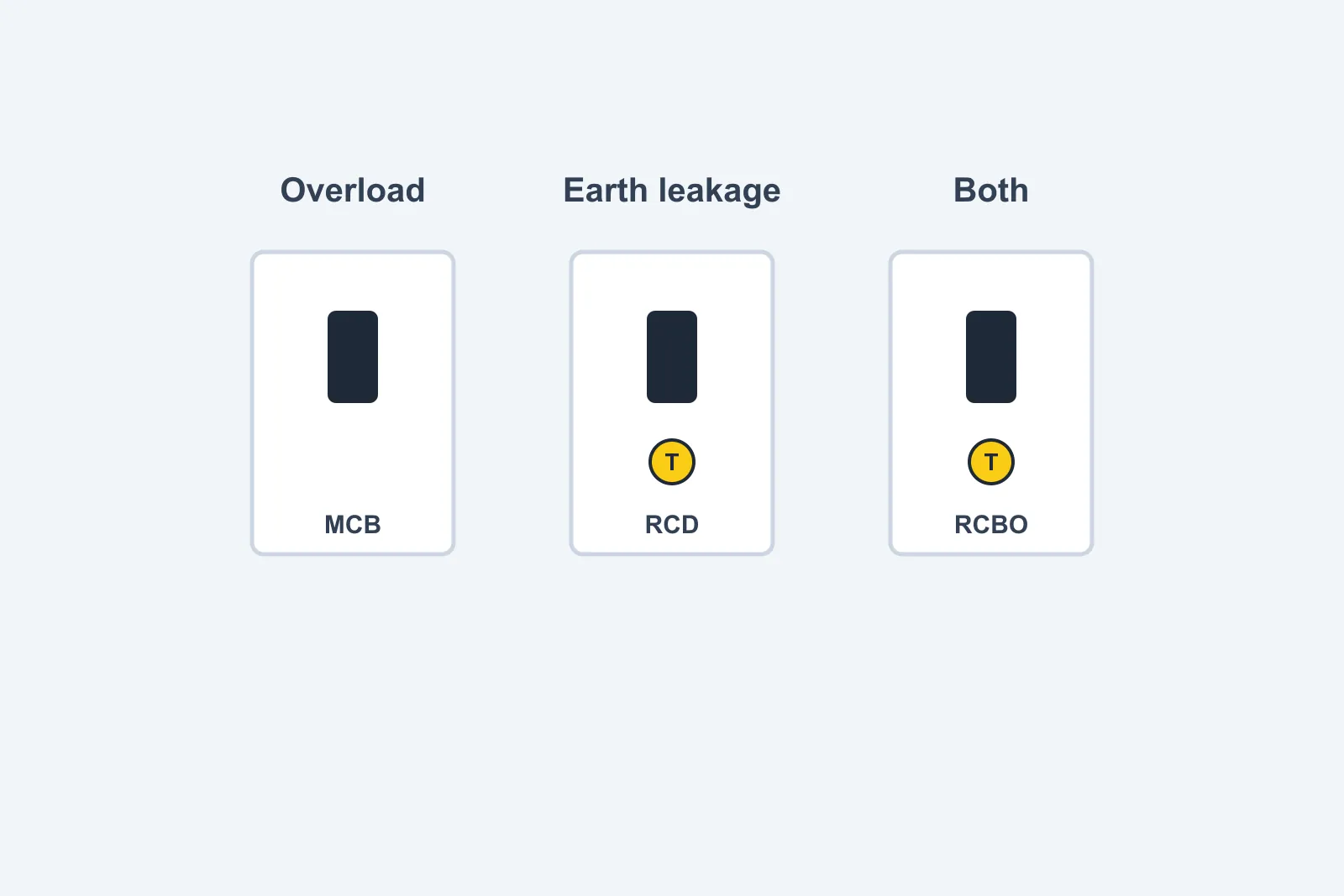
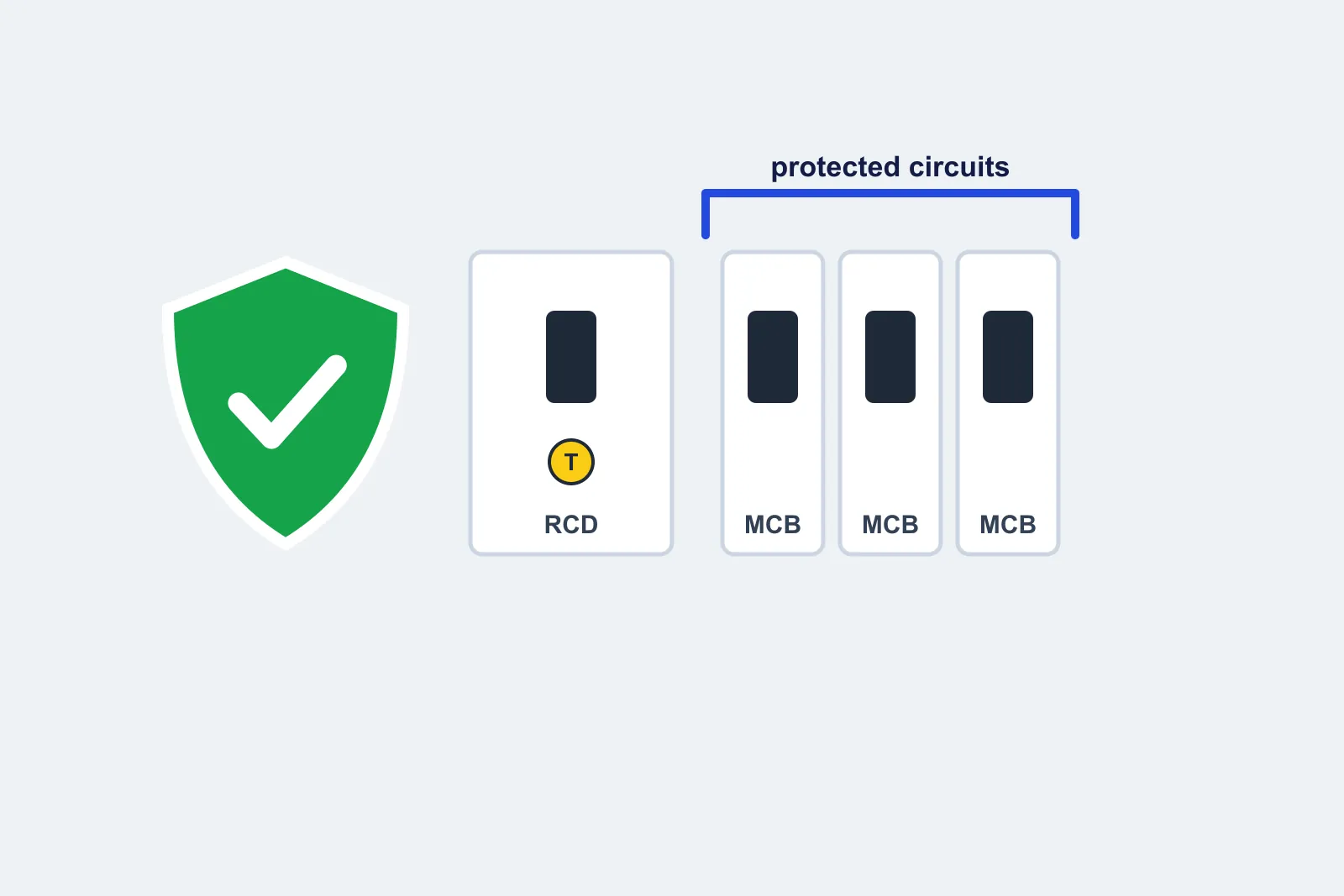
Open the cover of your consumer unit and look for a switch marked RCD (or RCCB), usually wider than the others, with a small button marked 'T' or 'Test'. Some boards have one or two RCDs covering groups of circuits; others have RCBOs, which combine RCD protection with a circuit breaker for each circuit.
If you have an old fuse box with no RCD at all, you're missing a significant layer of protection. An electrician can advise on upgrading.
Need an electrician?
Describe the job and compare free quotes from local electricians near you.
- Free to use
- No obligation
- Compare local electricians
- Quick online form
You'll continue to our quotes partner, MyJobQuote, to describe your electrical job.
Testing your RCD
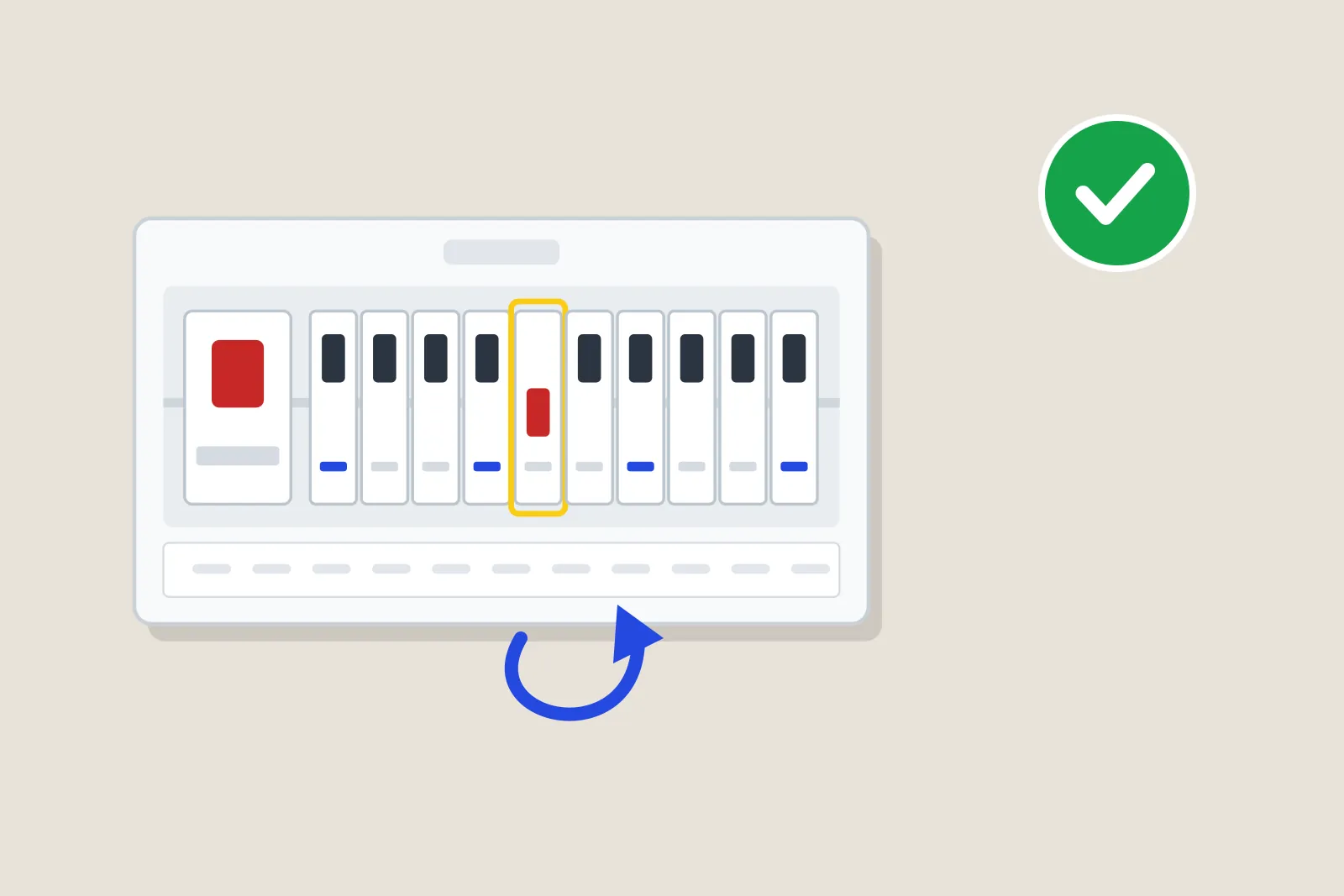
Manufacturers usually recommend pressing the test button every few months – many suggest every three or six months. When you press it, the RCD should trip off straight away. Then simply switch it back on.
It will turn off everything on those circuits, so do it at a convenient time and be ready to reset clocks. If pressing the button does nothing, the RCD may be faulty – get an electrician to check it.
Why RCDs sometimes trip 'for no reason'
There's almost always a reason – it's just not obvious. Damp, an ageing appliance or several small leakages adding up on one RCD can all cause trips. If it's happening often, an electrician can test the circuits and, if needed, spread them across more RCDs or upgrade to RCBOs so one fault doesn't knock out half the house.