Why security lights end up high on the wall
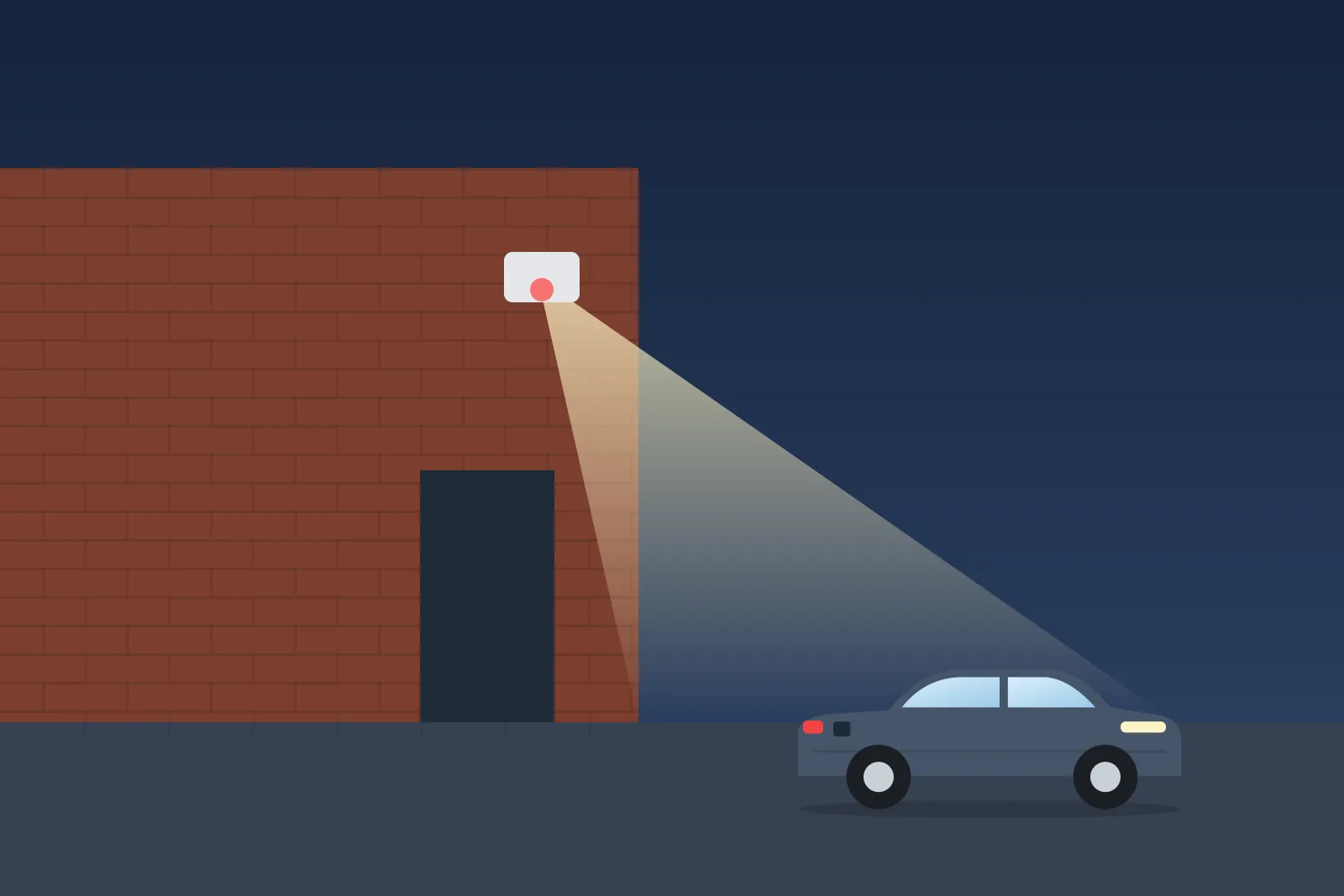
A security light works best when it's mounted well above head height. Many PIR sensors are designed to sit at around 2 to 3 metres, roughly level with the top of a ground-floor window or a little higher. From there the sensor covers a wider area of drive or garden, the beam spreads further and the fitting is out of reach of anyone who'd rather it wasn't working. Floodlights that light a long garden or a large drive are often placed higher still, under the eaves or on a gable end.
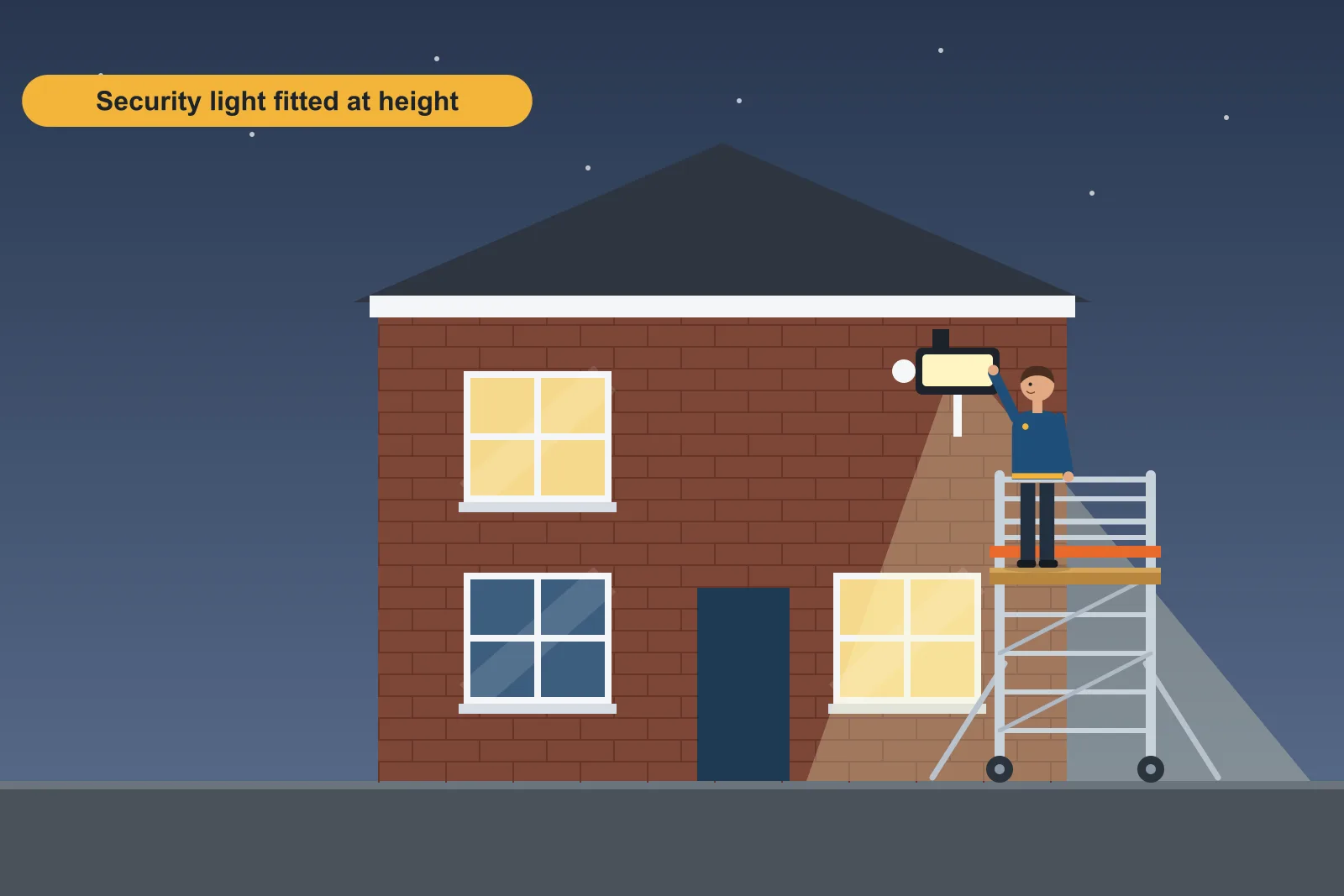
That height is also where access becomes a question. A porch light can be fitted from a stepladder. A light under the eaves of a two-storey house, at the peak of a gable or above a single-storey extension is a different job, and the way the electrician reaches it affects safety, time and cost.
When a ladder is enough
For a lot of homes, a ladder is the right tool. The Work at Height Regulations 2005 allow ladders for short, light work where a risk assessment shows that more protective equipment isn't justified. Fitting a single light on an ordinary two-storey house with firm, level ground below often falls into that category, provided the ladder can be footed or secured and the job doesn't involve stretching or leaning out.
A ladder starts to look less sensible when the ground below is sloping, soft or uneven; when the light sits above a conservatory, bay window or porch roof; when the job means drilling through thick masonry overhead; or when there's more than one fitting, a long cable run along the wall or a camera to fit at the same time.
Scaffold towers: the usual middle ground
For most domestic security lighting that's beyond comfortable ladder reach, a mobile aluminium tower is the answer. It gives a guarded platform to work from, both hands are free, and tools and fittings can sit on the deck rather than in a pocket. A tower can be wheeled along the wall to fit several lights in one visit and taken away the same day.
Towers do need firm, reasonably level ground and enough space at the base for their outriggers. They must be erected by someone trained to do it, usually to the PASMA standard, and checked before use. On a narrow side return, a gravel drive or a sloping garden they can be awkward, so mention the ground conditions when you ask for quotes.
If you're arranging access yourself, it's worth comparing scaffold tower hire that includes delivery and erection, so the tower is put up and inspected by a trained installer rather than assembled from the instructions on the morning of the job.
When full scaffolding makes sense
Fixed scaffolding is rarely put up just for a security light. It becomes the sensible choice when the fitting is very high, such as at the apex of a three-storey townhouse, when the wall can only be reached over a conservatory or flat roof, or when the ground rules out a tower altogether.
More often, the scaffolding is already there for another reason. If your roof, gutters, windows or render are being worked on, a scaffold is the perfect opportunity to have outside lighting, cameras and any external cable runs installed at the same time. The electrician can work safely along the whole wall, and you don't pay for access twice.
Who arranges the access?
There are three common arrangements, and it's worth being clear which one applies before work starts.
The electrician brings it
Many electricians own ladders and some own a small tower. For straightforward jobs they'll turn up with what they need and build it into their price. Ask what equipment they plan to use when they quote.
The electrician hires it
For taller towers or awkward sites, the electrician may hire a tower and pass the cost on. That's convenient, but check whether the hire appears as a separate line on the quote and who is responsible for having it erected and inspected.
You provide it
If scaffolding is already up for other work, or you're hiring a tower for several jobs, you may be asked to provide access. Make sure it has been erected by a competent person, inspected and handed over, and that it's suitable for the electrician's work before they arrive.
Need an electrician?
Describe the job and compare free quotes from local electricians near you.
- Free to use
- No obligation
- Compare local electricians
- Quick online form
You'll continue to our quotes partner, MyJobQuote, to describe your electrical job.
Planning the installation while the access is up
Good access is only part of the job. Before anyone climbs up, agree exactly where the light goes and how it will be wired. Most outdoor lights are fed from an existing lighting circuit inside the house, with the cable passing through the wall in a sleeve and sealed against the weather. Running the cable inside rather than along the outside wall looks neater and protects it from damage, though it may mean working in the loft or lifting a floorboard.
The circuit needs suitable RCD protection, and the fitting should have an IP rating that matches its position: IP44 is common for sheltered wall lights, while IP65 suits more exposed spots. The sensor also needs aiming so it covers your drive or door rather than the pavement and the neighbours' windows. A few minutes spent adjusting the detection zone and timer while the tower is still in place saves a second visit when the light turns out to switch on every time a car goes past.
How access affects cost and timing
Fitting a standard outdoor wall or security light usually costs around £100–£250 when it can be reached from a ladder. Tower hire adds to that, and the amount depends on the height, how long it's needed and whether it's delivered and erected for you. Scaffolding put up purely for a lighting job costs considerably more, which is why it normally makes sense only when it's shared with other work.
Timing matters too. Short winter days and wet weather limit how long anyone can safely work at height, and towers shouldn't be used in strong winds. If the job isn't urgent, spring and summer are easier. If it is, ask the electrician whether the light can be fitted at a lower, ladder-friendly position for now and moved later.
Questions to ask when you get quotes
A clear quote should explain how the fitting will be reached as well as how it will be wired. These questions help you compare like with like:
- How will you reach the fitting position, and is the access equipment included in the price?
- Will the cable run inside the house or along the outside wall?
- What IP rating and type of sensor do you recommend for this spot?
- Can you fit other outside lights or a camera on the same visit while the access is set up?
- Will I receive a certificate for the work?
Final thoughts
Most security lights are quick, inexpensive jobs, and access only becomes a question when the fitting needs to go high or the ground below is awkward. When it does, a properly erected tower or existing scaffolding makes the work safer and usually better finished. Raise access at the quoting stage, combine jobs where you can, and you'll end up with a light that covers the right area and was fitted without anyone balancing at the top of a ladder.