Slightly warm can be fine
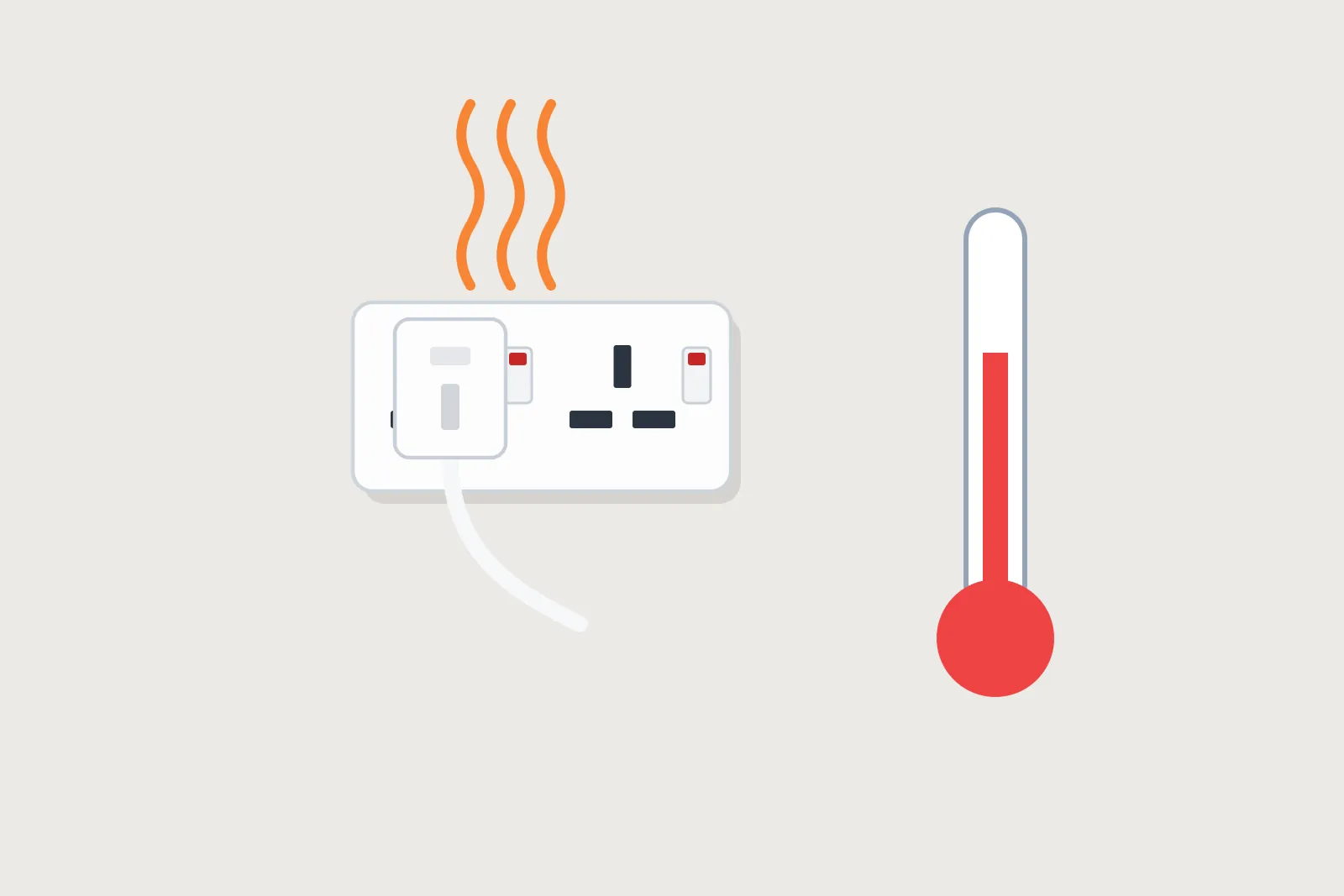
Plugs for appliances that draw a lot of power for a long time – tumble dryers, washing machines, fan ovens, kettles used repeatedly – can feel a little warm after use. That's because some energy is always lost as heat where metal parts touch.
Think 'mildly warm to the touch', not 'too hot to hold'.
Hot is not fine
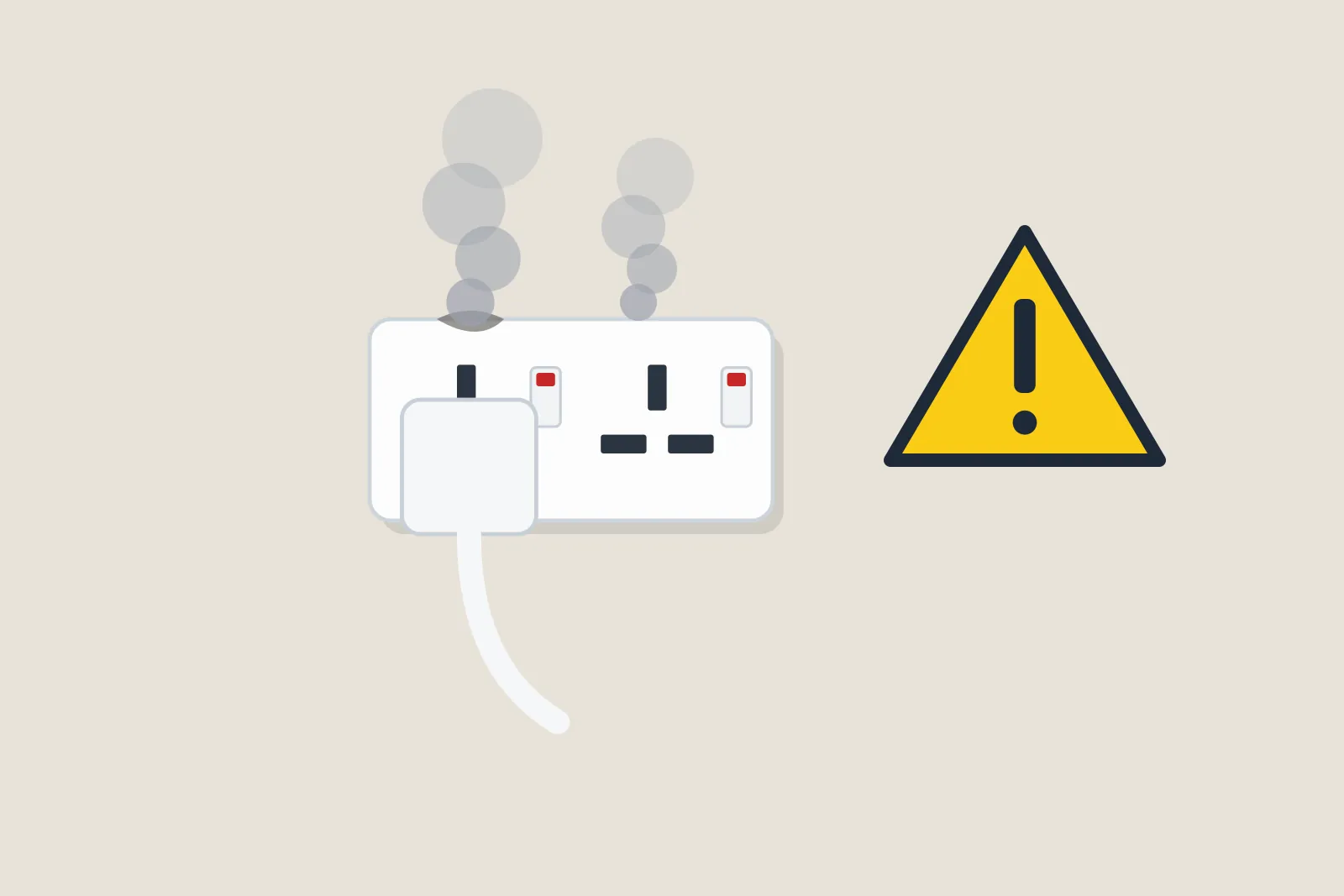
Stop using the plug and socket and get them checked if you notice any of these:
- Too hot to hold comfortably
- Discoloured or scorched plastic
- A burning or fishy smell
- Crackling, buzzing or sparking
- A loose plug that wobbles in the socket
- The socket faceplate itself feels warm with nothing much plugged in
Need an electrician?
Describe the job and compare free quotes from local electricians near you.
- Free to use
- No obligation
- Compare local electricians
- Quick online form
You'll continue to our quotes partner, MyJobQuote, to describe your electrical job.
Why it happens
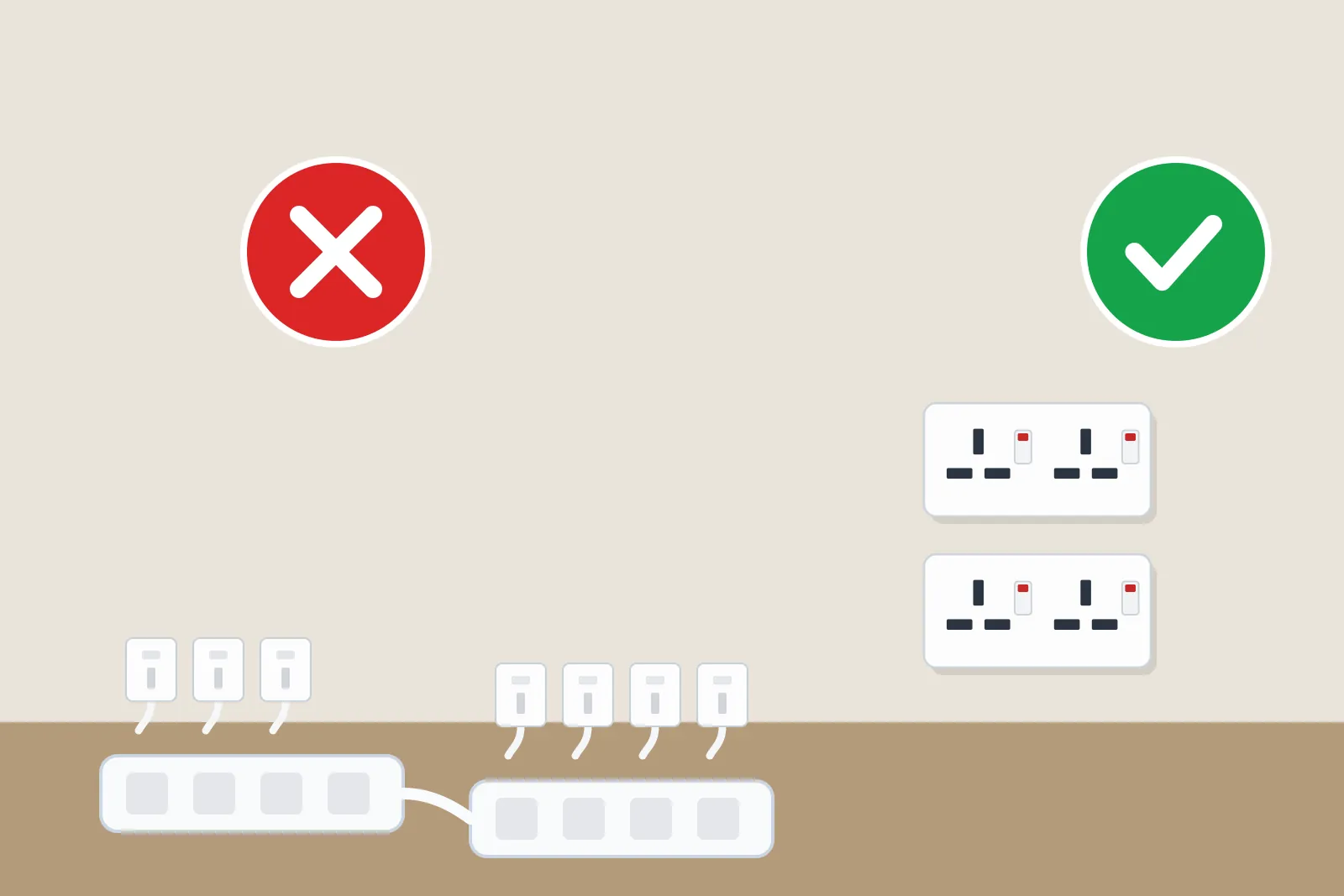
Most hot plugs and sockets come down to a poor connection: a loose terminal, worn socket contacts or a damaged plug. Overloading – especially with adaptors – makes it much worse. Cheap or counterfeit chargers and plugs can also get hot, and some are genuinely dangerous.
The fix
An electrician can replace worn sockets, check the connections and test the circuit. If you're relying on adaptors because there aren't enough sockets, adding a few more is a sensible, affordable upgrade.