Wired vs wireless cameras
Wireless and battery cameras are cheap and simple, but they can drop out on weak Wi-Fi, need charging, and usually only record when triggered. Wired cameras get both power and data over a cable, record continuously to a network video recorder (NVR) and tend to give better image quality and reliability. They suit homeowners who want proper coverage of drives, doors and gardens.
| Wired (PoE) | Wireless / battery | |
|---|---|---|
| Power | Over the network cable | Battery or nearby socket |
| Recording | Continuous to an NVR | Usually motion-triggered, often cloud |
| Reliability | High | Depends on Wi-Fi and battery |
| Installation | Cable runs, drilling, recorder location | Quick, minimal drilling |
| Monthly fees | Usually none | Often a subscription for cloud storage |
Wired and wireless home CCTV compared
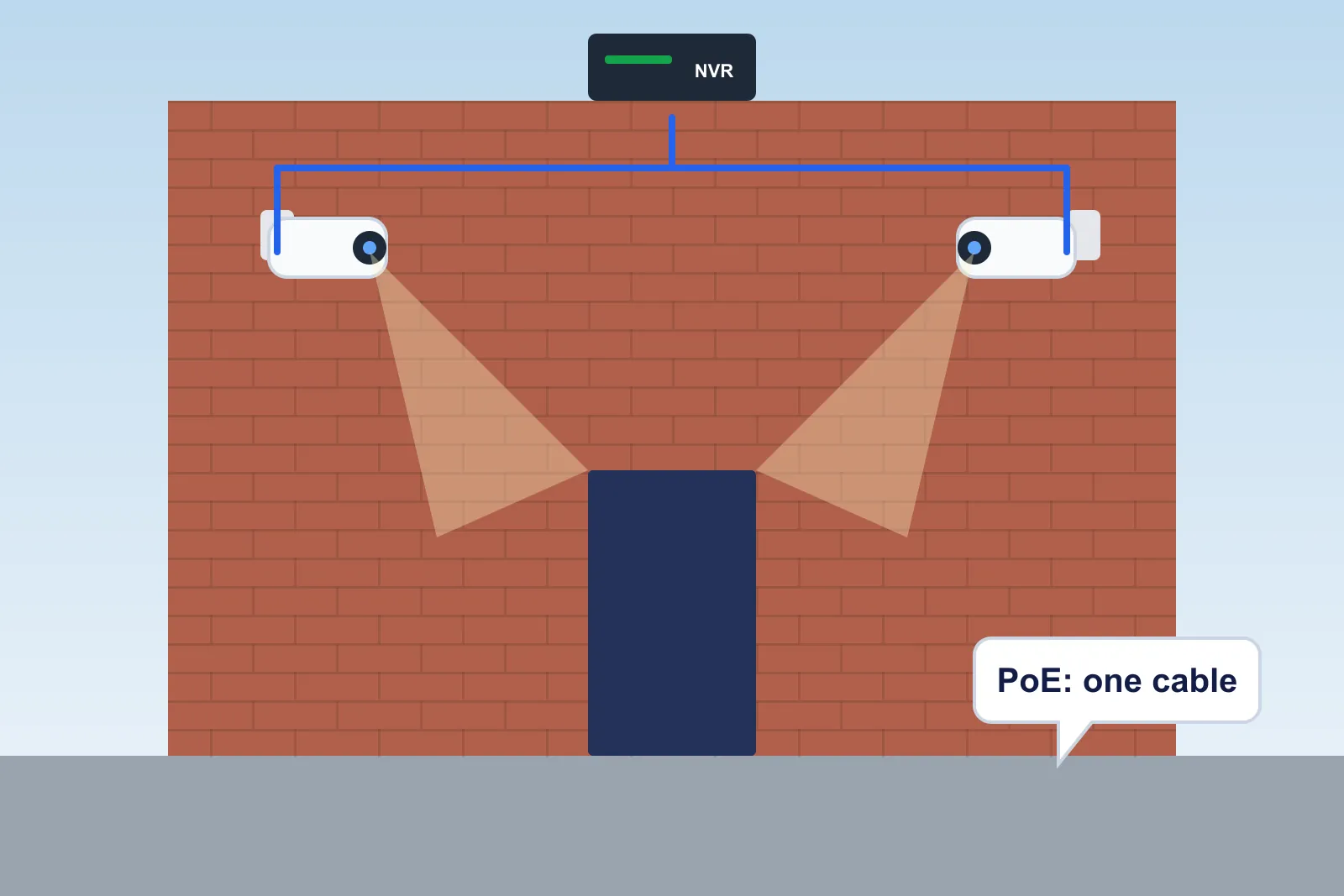
PoE: one cable for power and video
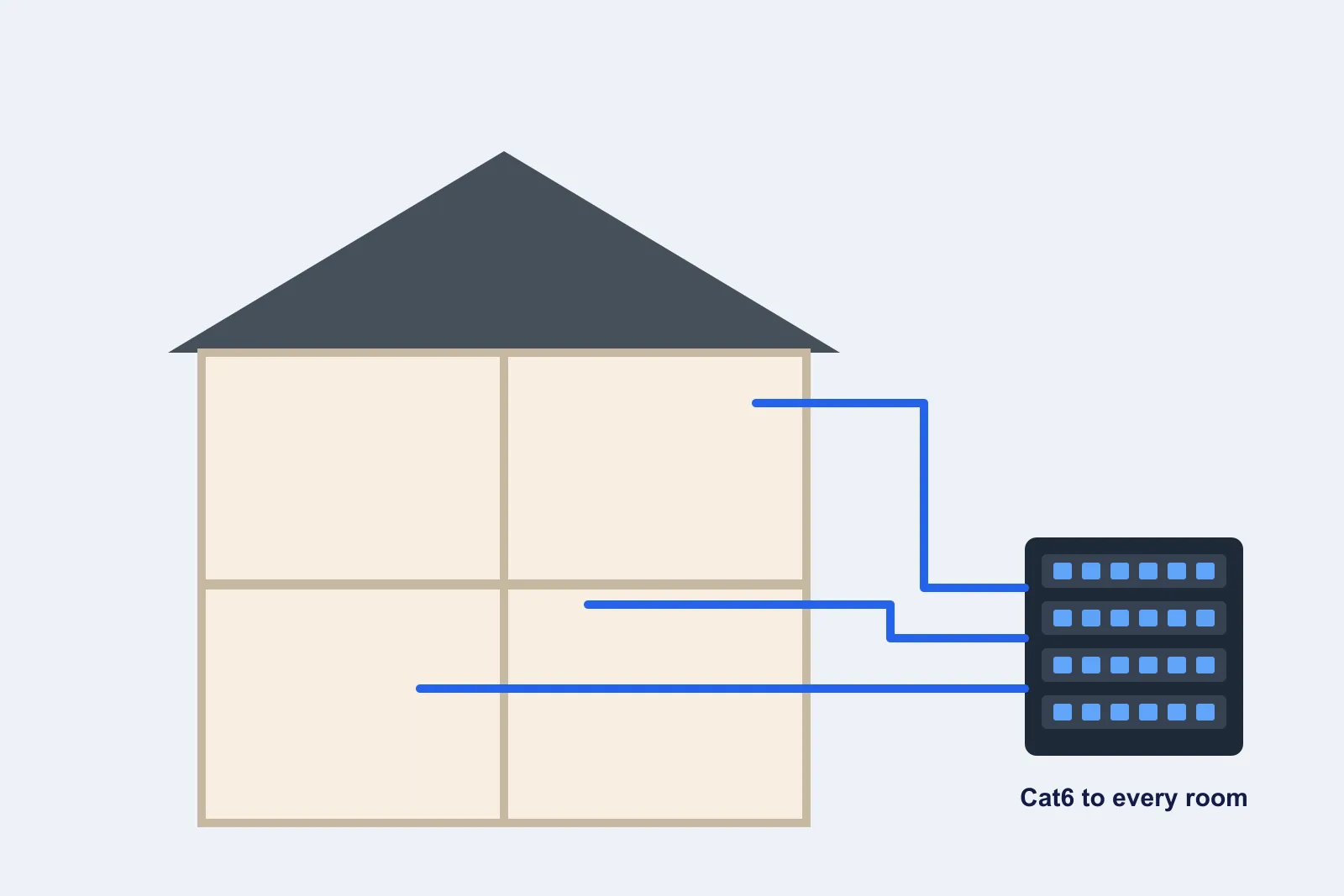
Most modern wired systems use Power over Ethernet (PoE). A single data cable (Cat5e or Cat6) runs from each camera back to the recorder, carrying both video and low-voltage power. That means no need for a mains supply at each camera position, which keeps installation simpler and safer.
Older analogue systems used coaxial cable plus separate power. If you're upgrading an old system, some 'HD over coax' cameras can reuse existing cables, but PoE is the usual choice for new installations. See ethernet and data cabling at home.
Planning camera positions
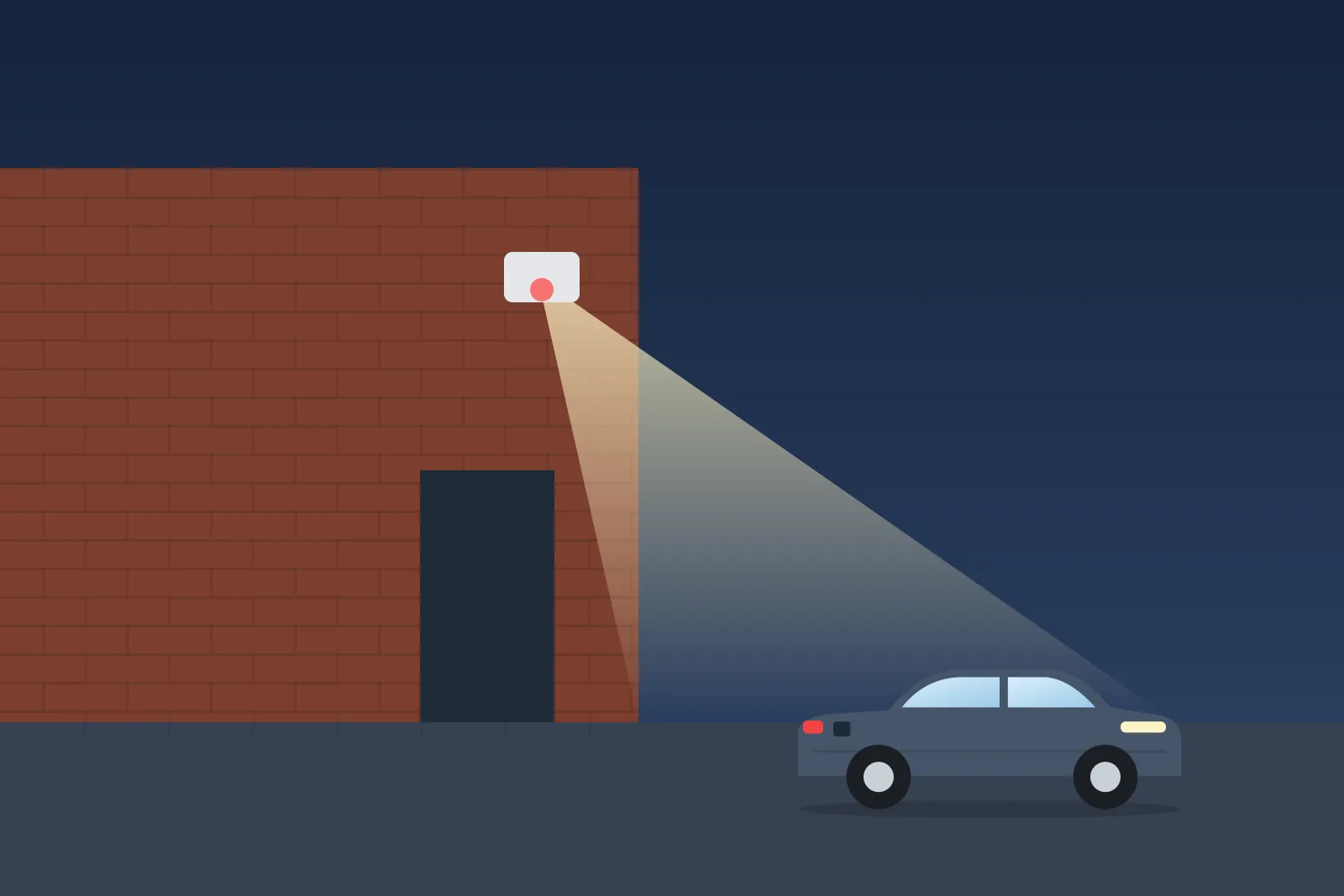
Cameras mounted too high capture the tops of heads. Mount around 2.5–3m high, angled to see faces. Night vision and good lighting help. Pairing CCTV with PIR security lighting improves image quality after dark.
- Front door and porch – faces at a natural height
- Driveway and parked cars
- Side gates and passages
- Back door and garden
- Outbuildings and garages
- Avoid pointing into neighbours' gardens and windows where possible
Need an electrician?
Describe the job and compare free quotes from local electricians near you.
- Free to use
- No obligation
- Compare local electricians
- Quick online form
You'll continue to our quotes partner, MyJobQuote, to describe your electrical job.
Data protection and neighbours
If your cameras capture images beyond your property boundary – a public pavement or a neighbour's garden – UK data protection law applies to you. You must have a good reason, tell people (signs help), keep recordings secure, delete them when no longer needed and respond to requests for footage. The Information Commissioner's Office has guidance for domestic CCTV users. Angling cameras and using privacy masking reduces the issue.
Where the recorder goes
The NVR needs a mains socket and, ideally, a wired connection to your router for remote viewing. Common locations are a loft, a cupboard under the stairs or a utility room. Somewhere out of sight is best, so an intruder can't easily take the recorder with them. A small surge protector or UPS can help keep it running through brief power cuts. See surge protection explained.
Typical costs
Prices depend on camera quality, cable routes and whether cables are hidden inside walls and lofts. Get quotes from local electricians and see garden and outdoor electrics.
| System | Typical cost (supplied and fitted) |
|---|---|
| 2-camera PoE system | £450 – £900 |
| 4-camera PoE system | £600 – £1,800 |
| 8-camera system | £1,200 – £3,000 |
| Extra camera added later | £120 – £300 |
| New socket for the recorder | £90 – £180 |
Indicative wired CCTV installation prices (2026)