UK wiring colours: old and new
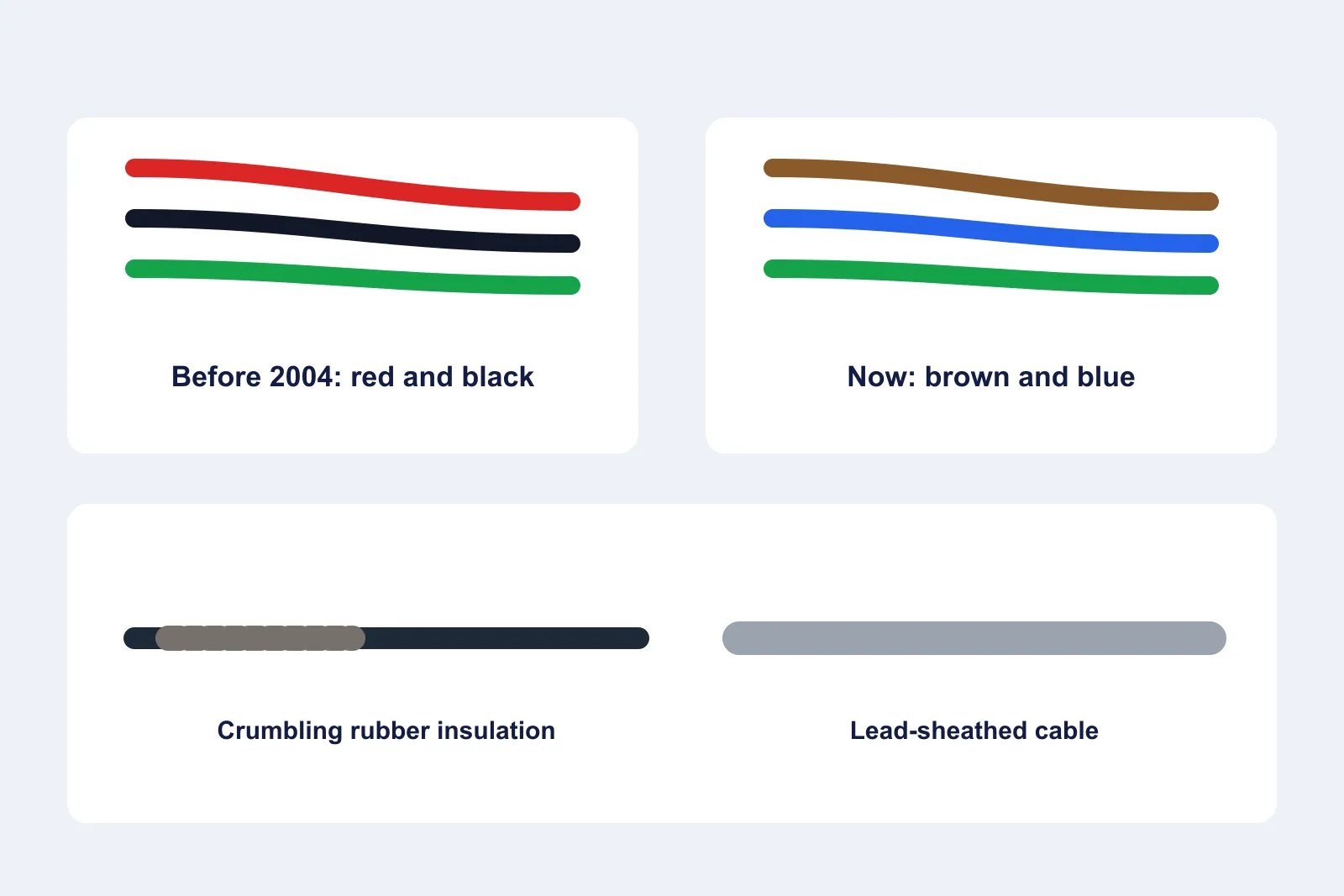
The UK switched to harmonised European colours in 2004–2006. Homes wired before then usually have red and black. That on its own isn't a problem: PVC-insulated red and black cable can be perfectly safe. Where old and new colours are mixed, an electrician should label the connection with a warning notice.
Watch out for black being used as a switched live in older lighting circuits – it isn't always neutral. Only a qualified person should work out what's what.
| Conductor | Before 2004 | Current (harmonised) |
|---|---|---|
| Line (live) | Red | Brown |
| Neutral | Black | Blue |
| Earth | Green/yellow (or bare in twin and earth) | Green/yellow |
Fixed wiring colours in UK homes
Older cable types to look out for
Rubber-insulated cable (VIR or TRS)
Used until the 1960s. Rubber insulation becomes brittle and crumbles with age, exposing live conductors. If you find rubber-insulated cable, it's a strong sign the installation needs rewiring.
Lead-sheathed cable
Rubber-insulated conductors inside a lead sheath, common in the 1930s–1950s. The sheath was often used as the earth. It's well past its expected life and should be replaced.
Fabric-covered flex
Cloth-covered cables to old pendant lights. The insulation underneath is often rubber and brittle. Replace with modern flex.
Early PVC with no earth on lighting
Some 1960s–1970s lighting circuits have no earth conductor. Metal light fittings shouldn't be installed on them without upgrading. See earthing and bonding explained.
Need an electrician?
Describe the job and compare free quotes from local electricians near you.
- Free to use
- No obligation
- Compare local electricians
- Quick online form
You'll continue to our quotes partner, MyJobQuote, to describe your electrical job.
Other warning signs
- Round-pin sockets or switches mounted on wooden blocks
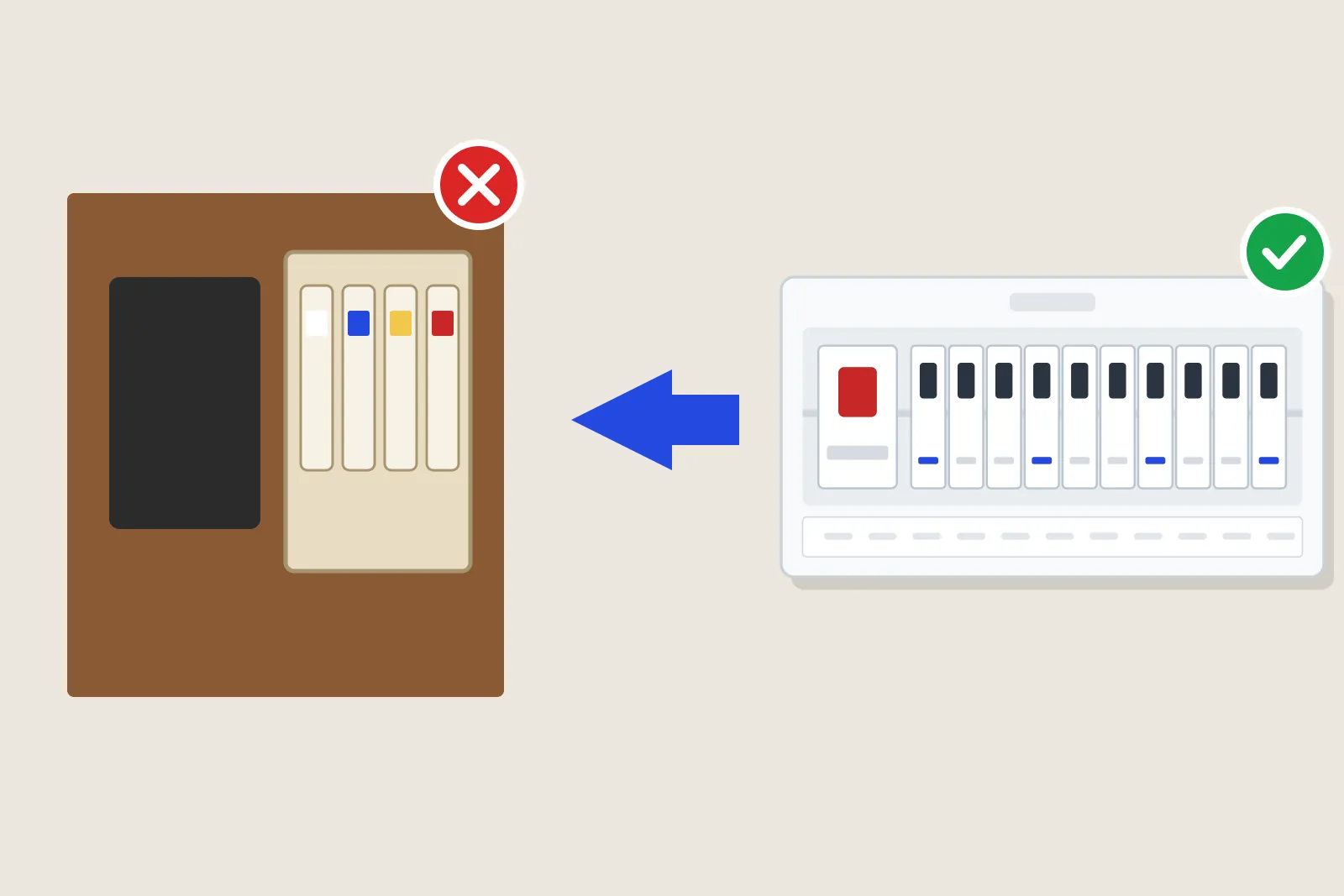
- A fuse box with rewirable fuses rather than a modern consumer unit
- Black, cracked or crumbling insulation at sockets and switches
- No RCD protection
- Scorch marks or warm sockets
Get it checked
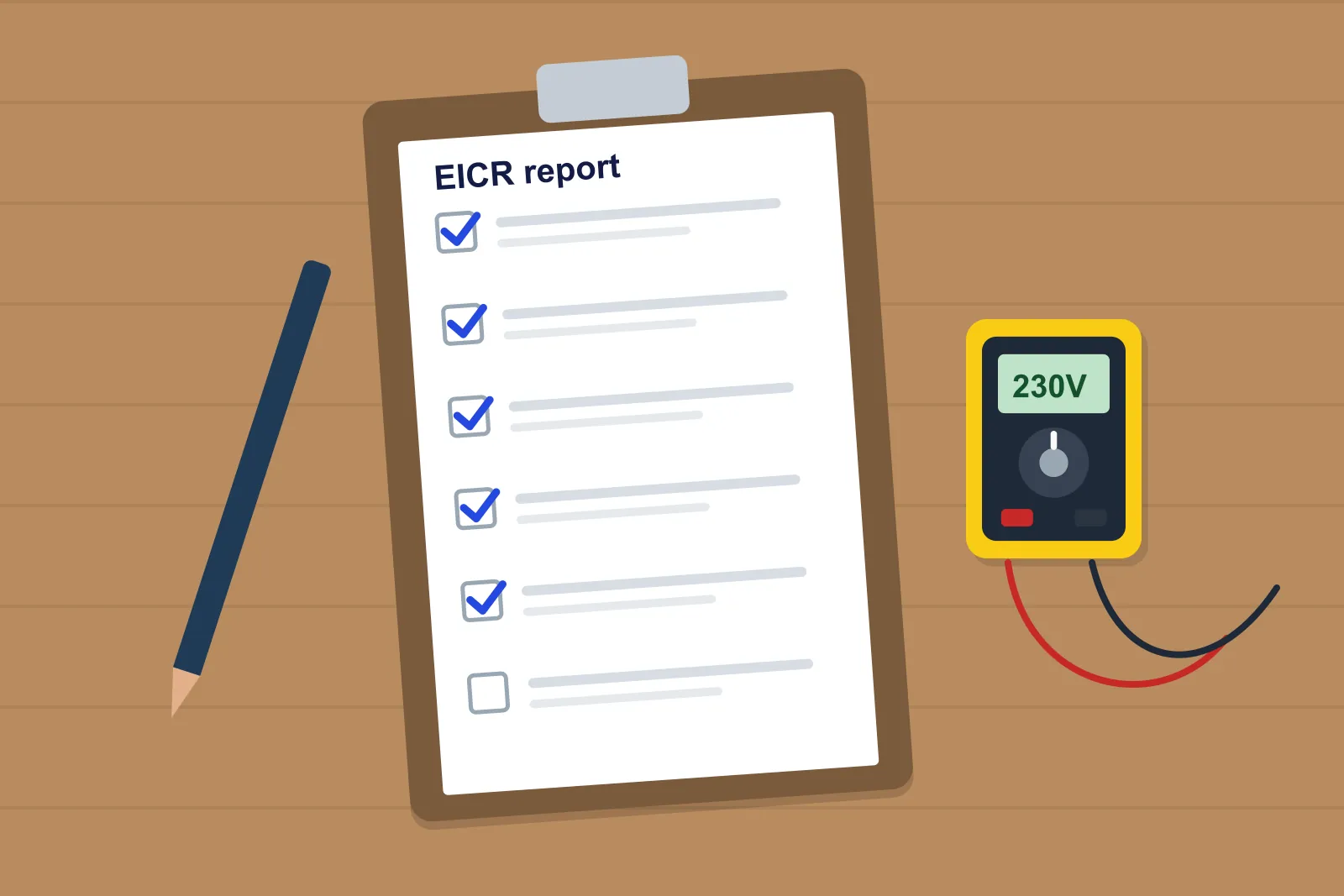
An Electrical Installation Condition Report (EICR) is the best way to find out what type of wiring you have and whether it's safe. It typically costs £150–£300 for a typical house. If the report finds rubber or lead-sheathed cable, the electrician will usually recommend a full or partial rewire. See EICR explained and how much does a rewire cost.
If you're buying an older house, see buying a house: electrical checks, then get quotes from local electricians.