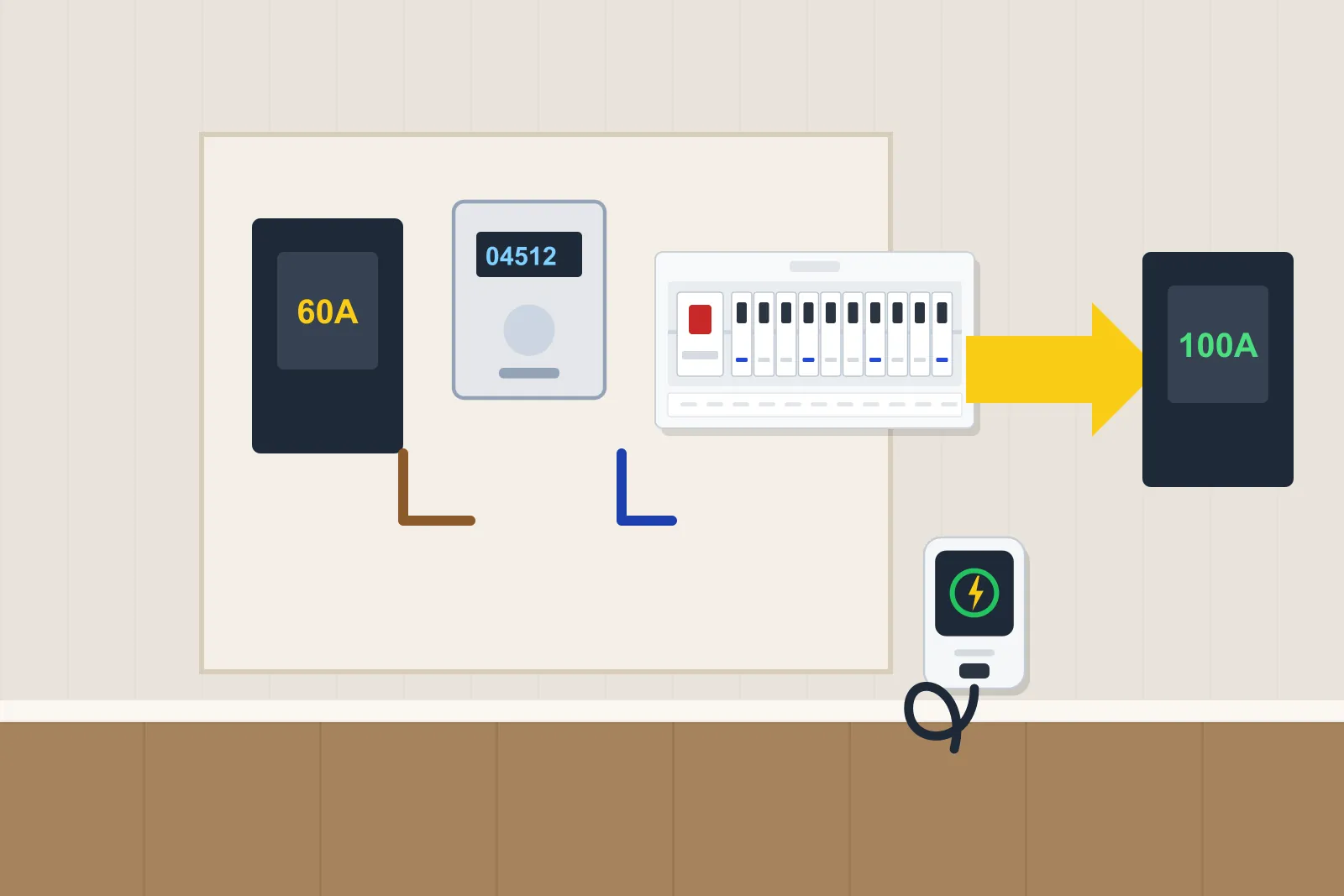
What the main fuse does
Between the cable coming into your house and your electricity meter is a sealed box called the cut-out. Inside is the main fuse, owned by your Distribution Network Operator (DNO). It protects the incoming cable from overload. Typical sizes are 60A in older homes, 80A, and 100A in newer homes. A 60A fuse supports about 14kW at once; a 100A fuse about 23kW.
You can usually see the rating printed on the fuse carrier or on the cut-out label. Don't break the seals or open the cut-out – it's dangerous and it's DNO equipment.
Why you might need an upgrade
Your electrician will do a maximum demand calculation. If the total expected load could exceed the fuse rating, they'll recommend an upgrade or a load management device that reduces the charger's output when other loads are high. See home EV charger guide and hot tub electrical supply.
- Adding a 7kW EV charger to a home with a 60A supply
- Electric showers (often 8.5–10.8kW) alongside an induction hob and oven
- Heat pumps and other large electric appliances
- A hot tub or annexe supply
- Extensions or conversions with new kitchens
Looped supplies
Some older terraced and semi-detached houses share a looped service cable with a neighbour. Looped supplies limit how much each house can draw and often need to be split into separate supplies before a fuse upgrade or EV charger can be fitted. The DNO usually does this for free or at low cost, but it can take time.
Need an electrician?
Describe the job and compare free quotes from local electricians near you.
- Free to use
- No obligation
- Compare local electricians
- Quick online form
You'll continue to our quotes partner, MyJobQuote, to describe your electrical job.
How to request an upgrade
Contact your DNO – you can find yours using the Energy Networks Association's postcode lookup, or by calling 105. Many will upgrade a fuse from 60A to 100A free of charge, as long as the incoming cable and the meter tails can take it. Your electrician may need to upgrade the meter tails (the cables from the meter to the consumer unit) to a larger size, typically 25mm². The DNO may also need to replace the cut-out.
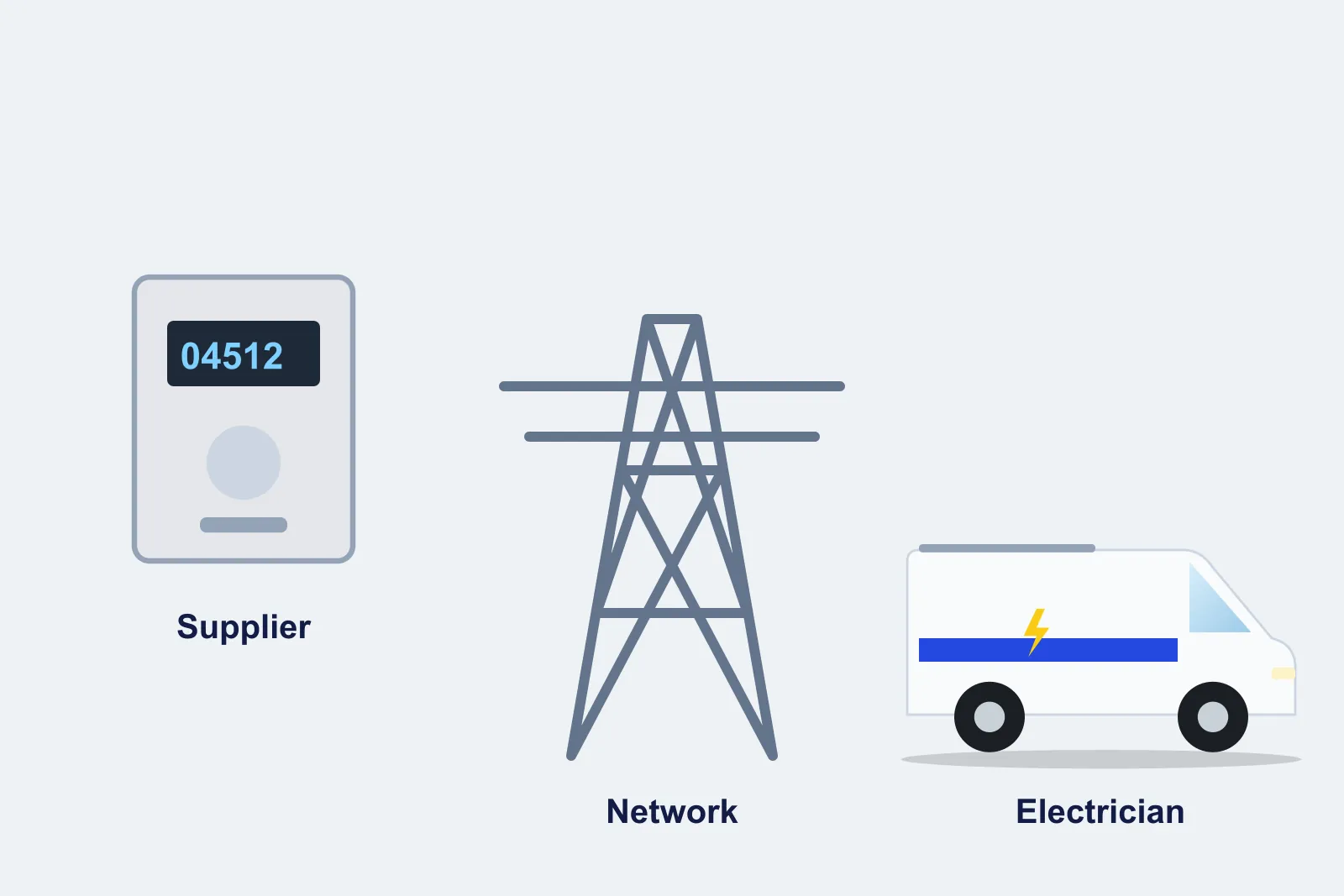
See who to call: supplier, network or electrician and consumer unit upgrades explained.
Typical costs
Speak to a local electrician first so they can calculate your demand and prepare the meter tails.
| Item | Typical cost |
|---|---|
| DNO fuse upgrade 60A to 100A | Often free |
| Unlooping a shared supply | Often free, sometimes a few hundred pounds |
| Upgrade meter tails to 25mm² | £80 – £200 |
| Isolator switch fitted next to the meter | £80 – £180 |
| Load management device with EV charger | Often included or £100 – £300 |
Indicative main fuse upgrade costs (2026)